The Beginning
How It All Started
Kintarō Hattori
Early Milestones
The Birth of the Seiko Brand
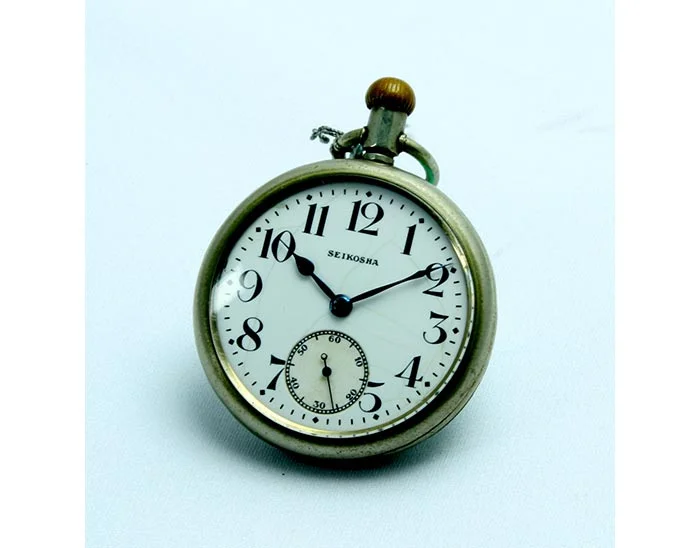
War, Stagnation and Recovery
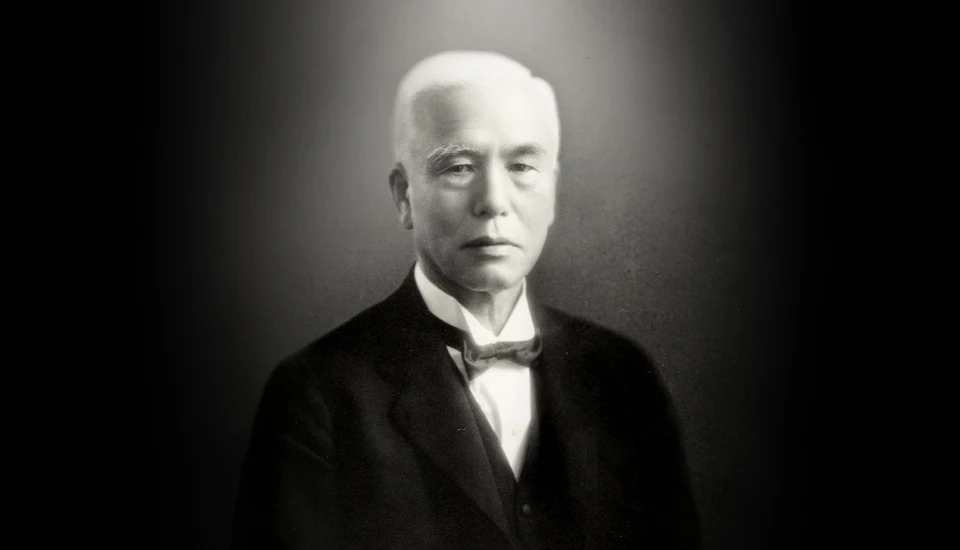
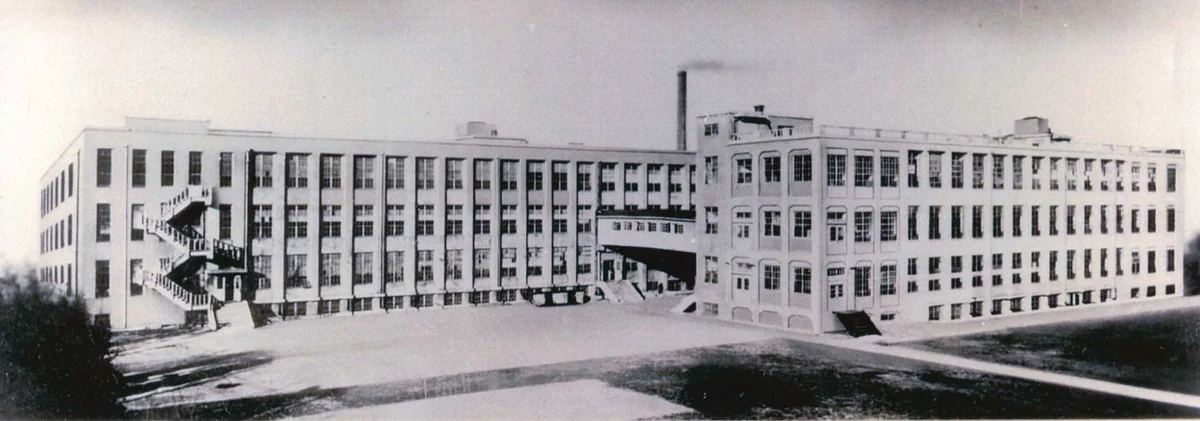
Seiko's founder, Kintarō Hattori, died in 1934, and the company passed to his sons. In 1937 the watch side of the Seikosha factory was spun off as Daini Seikosha, a dedicated watch works in Tokyo. The Sino-Japanese War, the Second World War and the Pacific War then forced every Hattori factory onto military production. Recovery afterwards was slow, and the quality of Seiko's watches suffered for years — helped back onto its feet by a government that had made rebuilding the timepiece industry a national priority.
Two Factories, One Family — Suwa & Daini, 1943–1970
The Rivalry That Built Vintage Seiko
For about twenty years, from the mid-1950s to the mid-1970s, Seiko was really two watch factories competing under one family. One was Suwa Seikosha, in the mountains of Nagano; the other was Daini Seikosha, in Tokyo. The push and pull between them is why Seiko went from a struggling post-war company to the largest watchmaker in the world — and it produced almost every vintage Seiko worth collecting today.
Watch historians now largely agree that this was never a real feud. The two factories were kept deliberately separate and set to out-do each other, but they stayed fundamentally on the same side — and as a way to run a company, it worked remarkably well.
It began with two factories in Tokyo
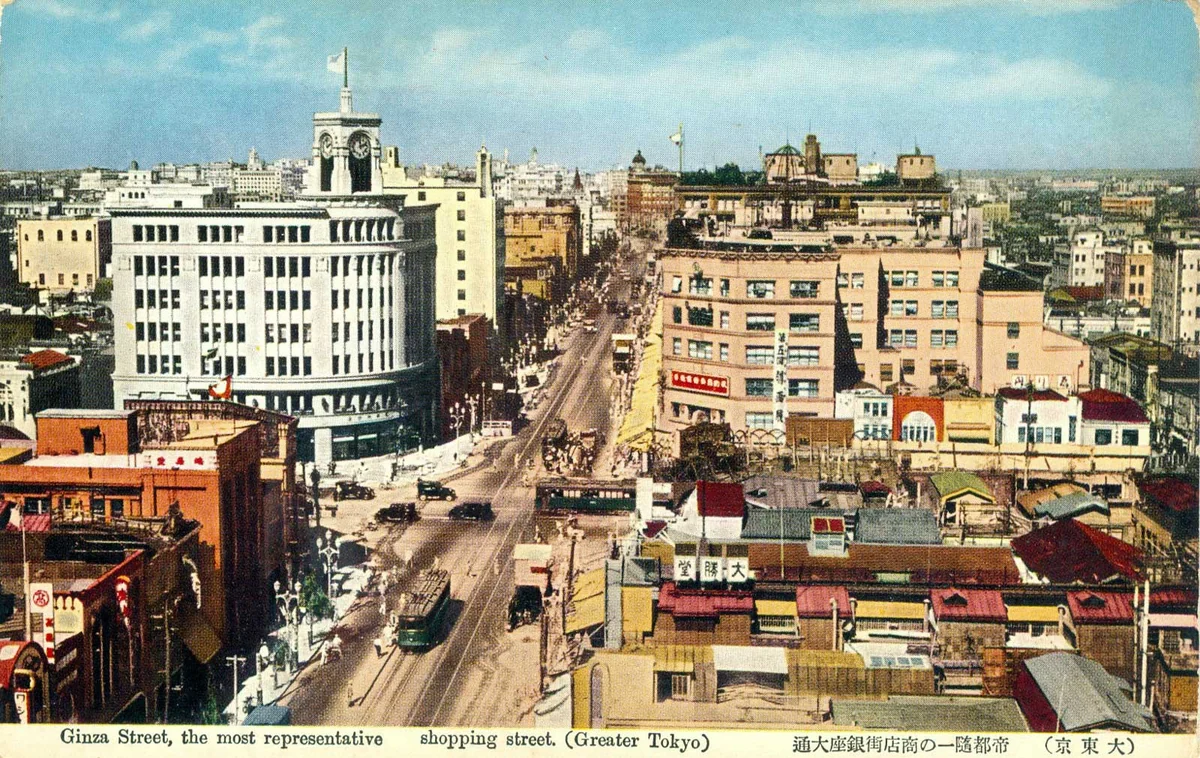
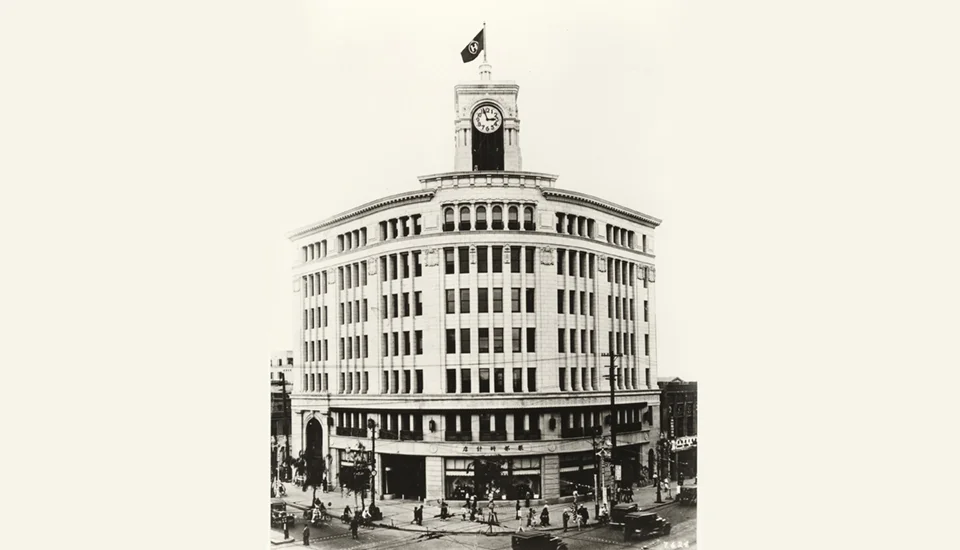
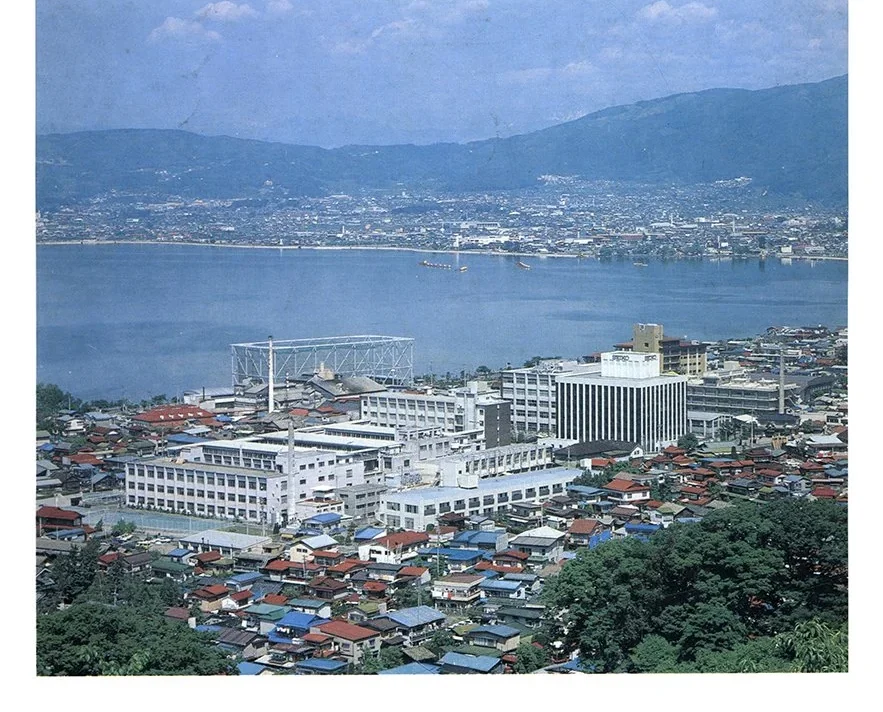
People often say Seiko divided itself in two in 1959 to create internal competition. The truth is slower and less tidy. At the start of the Second World War, what we now call Seiko was two separate businesses — both in Tokyo, both owned by the Hattori family, but run independently. K. Hattori & Co. was a clock maker and retailer, home of the famous Hattori Tokeiten store in the Ginza district and of the original Seikosha factory. Daini Seikosha was a dedicated watch factory elsewhere in the city. As war approached, Daini needed to raise its output and to set up production away from the capital in case it was bombed.
In 1942 a former Hattori Tokeiten employee, Hisao Yamasaki, started his own small watch firm, Daiwa Kogyo, in the Suwa area of Nagano — well away from Tokyo. In 1943 Daini partnered with it and ran the Nagano workshop as a branch, directed from Tokyo. It proved a wise precaution: late in the war Daini's Tokyo factory was destroyed, and watchmaking had to carry on from scattered backup workshops around the country. By 1949 the Tokyo factory was rebuilt and the backup sites closed — but Yamasaki persuaded the Hattoris to keep the Nagano factory going as well, still as part of Daini. That is how Seiko came to have two watch factories: Daini in Tokyo, and its offshoot in Suwa, Nagano.
The turning point was 1953
Right after the war, Seiko's watches were not good. Materials were scarce, and both factories were mostly building lightly altered copies of Swiss movements rather than designs of their own — they shared the same borrowed base, a movement Seiko called the "Super," almost identical to a Swiss ETA design of the time.
In 1953, one of the founder's sons, Genzō Hattori, decided that having the two factories share everything was holding back new ideas. He gave the Tokyo and Nagano factories their own separate management and told each to do its own research. That decision — six years before the "1959 split" people talk about — is where the real competition began.
It worked almost at once. In 1956 the Suwa team produced the Marvel, the first movement Seiko could honestly call its own design. Daini, under obvious pressure to match it, answered in 1958 with the caliber 54 in a watch called the Cronos — though, tellingly, it kept selling its older Swiss-style movements alongside it until about 1960. Suwa only became a formally separate company, Suwa Seikosha, in 1959. By then the two had been racing each other for years, and through the 1960s they released new versions of their watches at a furious pace, each trying to look like the more advanced of the two.
Rivals, but also brothers
The competition drove real results, but it was never hostile, and the Hattori family made sure it stayed that way. Seiko's own historians describe the arrangement as a family: the Hattoris were the parents, K. Hattori & Co. the eldest son, Daini the second son, Suwa the third. Brothers compete for their parents' approval — but they are still brothers, and expected to help each other.
You can see it in the technology. Two of Seiko's most important inventions of the era — Diashock, its shock-protection system, and the Magic Lever, its clever and long-lived automatic-winding mechanism — were both created at Suwa and then handed straight to Daini to use as well. And when both factories sent movements to the observatory accuracy trials in Neuchâtel, Switzerland, they quietly cooperated: they pooled the best parts from both plants, shared the specialists who fine-tuned the movements, and fitted every entry — Suwa's included — with mainsprings made by Daini, because Daini's mainsprings were simply better.
Neuchâtel, and why it ended
Seiko's results in those Swiss trials were poor for the first few years — not because the movements were bad, but because they were being magnetised and shaken out of adjustment during the long flight from Japan. It took a few years of experimenting with anti-magnetic metals and better packing to fix it.
By 1968 Seiko's mechanical movements were finally good enough to beat the Swiss. That year the competition was suddenly suspended — and the popular story is that the Swiss stopped it to avoid losing at home. The real reason was quartz. Swiss firms had begun entering quartz movements in the same category, and no mechanical watch could match quartz for accuracy; the organisers judged it an unfair contest and shut it down. Seiko took its movements to a separate set of trials in Geneva, where Daini's mechanical movement scored higher than every other mechanical entry — and still lost overall to an experimental quartz.
Grand Seiko above King Seiko
The reason Grand Seiko sits above King Seiko comes down to two things: which proposal arrived first, and how each factory checked its own work. Suwa was first, with a plan for a very high-precision movement built to Swiss chronometer standards; Seiko's marketing manager, Ren Tanaka, named it Grand Seiko — a "great Seiko" meant to catch up with and overtake Switzerland. When Daini later proposed its own high-precision movement, the same manager placed it just below, as the "King of Seiko."
There was a real quality gap behind the names. In 1960 Suwa built its own strict in-house testing process, as demanding as the Swiss one, and every Grand Seiko movement had to pass it. Daini had no such system, so King Seiko — even though it was Daini's finest watch — was not held to the same standard. That also kept it cheaper, which suited Seiko fine.
From the mid-1960s the Hattori family took brand planning away from the factories, because the sheer number of Seiko models was starting to hurt sales, and began assigning specific watches to each plant. Daini's manual-wind 44KS movement — a descendant of that original caliber 54 — was judged so good that Daini was asked to build a Grand Seiko around it: the 44GS, now seen as one of the finest vintage Seikos ever made. After that, both factories built both brands, and some movements were even produced at both plants to meet demand.
That is the pattern across the whole period. On paper Suwa and Daini were competitors; in practice they were two halves of one workshop, each pushing the other to build better movements while quietly sharing whatever worked. The neatest proof is a single movement: the high-beat 5740C, normally found only in Suwa's Lord Marvel — yet which also turns up made by Daini, to a slightly different design, and adjusted to a higher standard than Suwa's own version.
The Seiko family tree, 1956–1976
How the main vintage Seiko lines grew out of each other, factory by factory. Read each row from left to right. Watches in gold are in our shop right now; click one to see it.
Suwa Seikosha — Nagano
Daini Seikosha — Tokyo
Our own simplified drawing of the main lines, based on collectors' lineage charts and the research of David Flett and Pedro Mendes. An arrow means "led to" or "was developed from", not always a direct successor.
Who built what — the vintage lines at a glance
Suwa Seikosha — Nagano (later Seiko Epson)
Marvel · 1956–1960 — the first in-house movement
Gyro Marvel · 1959 — first Magic Lever automatic
Lord Marvel (5740) · 1958–1967, hi-beat 5740C to c.1975
Crown & Crown Self Dator (57xx) · 1959–1965
Crown Special (cal.341) · 1961–1964 — between Crown and Grand Seiko
Liner, Sportsman · dress & entry lines, from 1960
Skyliner (6220) · from 1961
Sportsmatic & 5 Sportsmatic (6600) · 1960–1966
Seikomatic family (6200 / 8300), incl. Seikomatic-R & SilverWave · 1960–1968
Grand Seiko — born here, 1960 · 3180, 57GS, 62GS, 61GS & 61GS hi-beat (1968), 56GS (1970)
King Seiko 56KS & VANAC (5621 / 5625 / 5626) · 1968–1975
Alpinist · 1959–1964 — early field / climbing watch (name revived 1995)
Dive watches — every vintage Seiko diver was built here (full list below)
World Time GMT (6217) · 1964 — Seiko's first GMT · Navigator Timer (6117) · 1968
6139 / 6138 automatic chronographs — the Pogue, Bullhead, Speed-Timer · 1969 onward
Bell-Matic alarm automatic (4006) · 1966–1976
Lord Matic standard (5601 / 5606) · 1968–1977
Seiko 5 / 5 Actus (6100 family), incl. Advan (6106) · 1963–70s
Daini Seikosha — Tokyo (later Seiko Instruments)
Seiko Automatic · 1955 — Seiko's first self-winding wristwatch
Unique & other early Daini dress watches · from 1955
Cronos (caliber 54), incl. Cronos Water Proof & Self Dator · 1958–1963
Fairway (cal. 760 / 761) · 1962 — first one-piece waterproof case
Champion (850 / 860, later 7622) · from 1962 — dress & entry line
Sportsmatic 5 Deluxe (7605 / 7606 / 7619) · 1963–1968
King Seiko — born here · 54KS (1961), 44KS (1964), 45KS hi-beat (1968), automatic 52KS (1971–1975)
Crown / Counter Chronograph (5717 / 5719) · 1964–1967 — Japan's first chronograph
Grand Seiko (shared from 1967) · hand-wound 44GS (1967), 45GS hi-beat (1968)
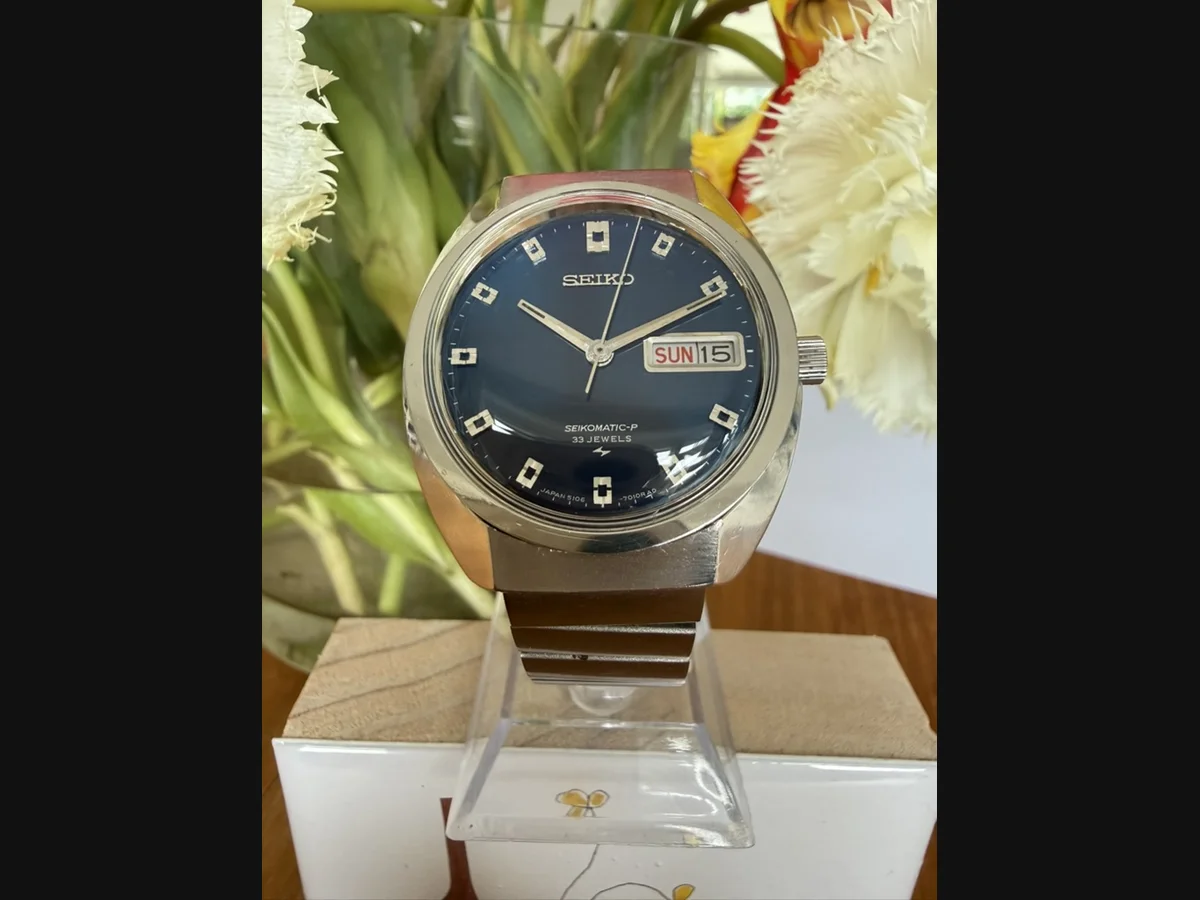
Seikomatic-P (5106) · 1967–1969 — 33-jewel showpiece
New Five / Presmatic (5100 family) · 1966–1971
Seiko 5 / 5 Actus (7000 family), incl. Advan (7019 / 7039) · late 1960s–70s
7015–7018 automatic chronographs · 1969–1978
Lord Matic Special (5206 / 5216) · 1971–1977
Gold Feather · 1960 — then the world's thinnest three-hand movement
Ultra-thin (68 / 6810) · from 1969
The two brands crossed over. Daini built Grand Seikos — the hand-wound 44GS and 45GS — while Suwa built a King Seiko of its own, the automatic 56KS; the other King Seikos (44KS, 45KS and the automatic 52KS) stayed at Daini. The everyday Seiko 5 and Actus lines ran at both plants in parallel — Suwa's 6100 family and Daini's 7000 family — and a number of individual calibres, the 6139 chronograph among them, carried parts from both.
Seiko's vintage dive watches — all made at Suwa
62MAS (6217-8000 / 8001) · 1965 — Seiko's first diver, 150 m
6215-7000 · 1967 — 300 m, one-piece case
6105-8000 / 8009 · 1968–1970 — 150 m round case (the early "Willard", a.k.a. "Christmas")
6105-8110 / 8119 · 1970–1977 — 150 m, asymmetric cushion case ("Captain Willard")
6159-7000 / 7001 · 1968–1978 — hi-beat 300 m
6159-7010 · 1975 — 600 m titanium professional ("Grandfather Tuna")
6306-7000 / 7001 · 1976 — the first Turtle, for Japan: 21 jewels, hacking, 150 m
6309-7040 / 7049 · 1976–1988 — the export Turtle, 17 jewels, 150 m
6309-7290 / 729A / 729B · 1982–1988 — slimmer, smaller cushion case for export ("Slim Turtle")
6138 / 6139 automatic dive-chronographs · early–mid 1970s
Every mechanical Seiko diver of the vintage era was designed and built at Suwa — Daini never made one.
On this page: the Marvel, Gyro Marvel, Crown Special, Skyliner, the Seikomatic family, Seikomatic-R and the King Seiko 56KS are all Suwa watches; the Fairway, the Sportsmatic Deluxe (7619), the Advan (7019) and the Seikomatic-P are Daini.
How to tell a Suwa from a Daini
Read our full guide: Seiko Suwa vs Daini, and how to tell them apart →
You can usually tell which factory built a vintage Seiko without opening it. The dial (often near 6 o'clock) and/or the caseback carries a tiny factory mark: Daini stamps a jagged thunderbolt, while Suwa stamps a curling swirl — a little like a wave or a whirlpool.
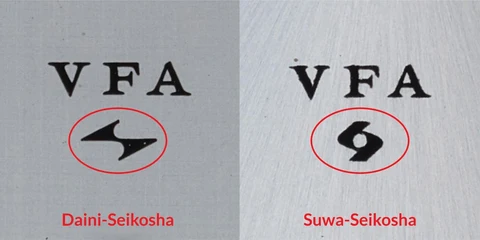
The marks on two Grand Seiko V.F.A. casebacks — Daini's thunderbolt (left), Suwa's swirl (right). The exact shape varies a little from model to model.
Based on "Seiko Factory History — Daini, Suwa, Fact and Fiction" by David Flett and Pedro Mendes, Beyond the Dial.
The Marvel — First In-House Seiko, 1956
Seiko Builds to Its Own Standard

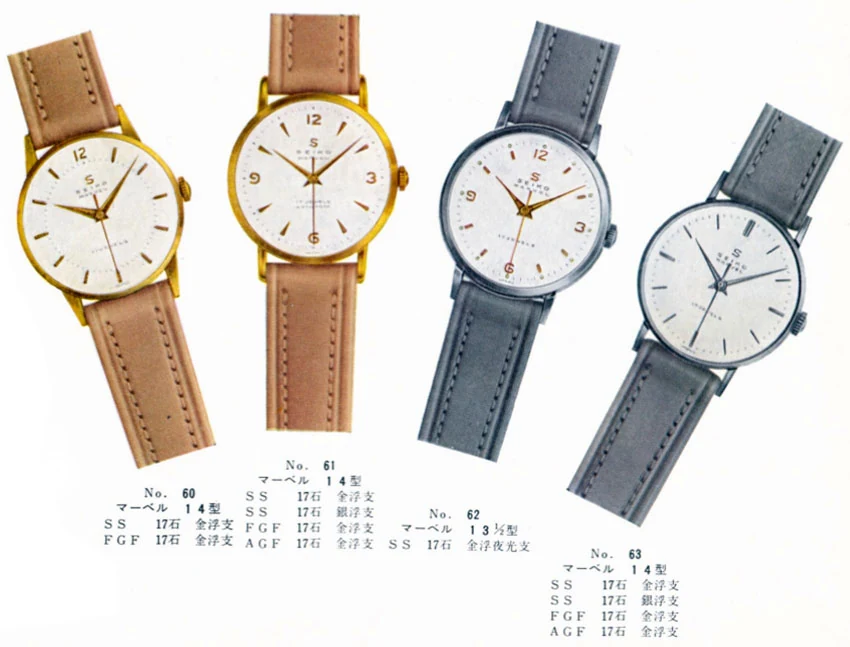
In 1956 Seiko's Suwa factory introduced the Marvel — the first fully in-house produced Seiko wristwatch and a true precursor of the Grand Seiko. The name reflected the ambition behind it: built on Seiko's own mainspring and balance spring rather than bought-in parts, it was marketed as an "amazing timepiece" and went on to beat Swiss rivals in Japanese watchmaking competitions, living up to the name.
It stayed in production for only about five years, until 1960, but in that short window Seiko taught itself how to build a watch to its own standard. The movement was laid out to a generous diameter of roughly 26 mm — noticeably wider than other Japanese wristwatch movements of the day — a deliberate choice to give the balance and going train the room they needed to run accurately. Across the run Seiko offered the Marvel in 17-, 19- and 21-jewel grades.
Most Marvels were cased in steel or in one of several platings, with a smaller number made in solid gold. Because the design was revised so often, a wide variety of dial and case styles followed one another in quick succession over those few years — some original to Seiko, others openly influenced by Swiss designs already in fashion at the time. When production ended in 1960, the enlarged, in-house architecture Seiko had developed for the Marvel carried straight through into the first Grand Seiko.
The Magic Lever System — Seiko, 1959
The Gyro Marvel & the Magic Lever

Three years after the Marvel, Seiko introduced one of its most influential inventions: the "magic lever" self-winding mechanism. Swiss automatics of the era relied on a reverser-wheel system to turn the rotor's back-and-forth swing into one-way winding power — effective, but mechanically complex. Seiko's engineers solved the same problem with a small scissor-shaped claw lever riding on an eccentric pin: as the rotor swings clockwise or counter-clockwise, the lever's two pawls alternately pull and push a transmission wheel, so the mainspring winds efficiently no matter which way the wrist moves. It did the job with far fewer parts, made automatic watches simpler and cheaper to build reliably, and proved so effective that variants of the same mechanism are still fitted to Seiko's self-winding calibers today.
The magic lever debuted in the Gyro Marvel (Caliber 290) of 1959 — Seiko's first self-winding wristwatch, and the watch that first proved the concept.
From our archive — a Gyro Marvel we've had the pleasure of selling
Seiko Gyro Marvel — Caliber 290, 1959
 SOLD
A genuine 1959 Gyro Marvel fitted with the Caliber 290 described above — 17 jewels, Diashock, gold-plated case over a stainless-steel back, 100% original JDM import. Running and keeping good time with roughly a 36-hour power reserve, on a new brown leather strap — sold.
The Seikomatic — Seiko's Premium Automatic, 1960–1969
The Seikomatic Family, Model by Model
Seiko launched the Seikomatic in 1960 as its premium automatic — the true successor to the 1959 Gyro Marvel, Seiko's first self-winding watch — and for years it was marketed almost as a separate brand within Seiko, set apart from its ordinary dress watches. The first examples ran the ultra-thin caliber 603 (renamed 6201 in Seiko's 1964 four-digit renumbering, and the direct ancestor of the entire 62-series, including the 62MAS diver), just 4.80mm high, in 17-, 20-, 21- and 30-jewel grades — the 30-jewel version cased in gold, the rest in rhodium-plated steel.
The range grew quickly through the early 1960s: 1961 brought the first waterproof "Water Proof 30" models with a dolphin motif rated to 30 metres; 1962–63 added Self Dater variants (caliber 394, later 6205) and the SilverWave, a 603-based diver with an internal rotating bezel. In August 1963 Seiko's Suwa factory introduced the Seikomatic Slim — later branded Seikomatic-R — built around the all-new 830-series caliber, just 3.8mm thick and a full millimetre slimmer than the 6200 family, aimed at the Japanese "salaryman" who needed a watch that would slip under a business cuff.
By the mid-1960s the family had split along factory lines: Suwa's Seikomatic-R (83-series, up to 30 jewels, later rebranded Business-R / Business-A) prized slimness and reliability, while Daini's Seikomatic-P, introduced in 1967 around the 33-jewel 5106A caliber, packed in hacking seconds, integrated automatic/manual winding and an instant day-date change — a genuine engineering showpiece, made for barely two years before the "Seikomatic" name itself gave way to "Business" branding in the late 1960s. Its calibers lived on a while longer under that name before Seiko's automatic output broadly shifted to the newer 56- and 61-series movements through the 1970s — a gradual fade rather than a handover to any one successor. The Lord Matic (from 1968) and King Seiko ran alongside it throughout this period as separate lines, not replacements for it.
Range & movement history via Amateur Watch Fettler — The Seikomatic.
In the shop now — five Seikomatics, in chronological order


The Sportsmatic — An Automatic for Everyone, 1962–1968
The Sportsmatic & the Sportsmatic Deluxe
The Seikomatic, launched in 1960, was the true successor to the Gyro Marvel and carried forward as Seiko's premium automatic. The Sportsmatic, introduced in 1961, was developed directly out of the Seikomatic — the two share the same recessed crown position at 4 o'clock — but repositioned as a separate, more affordable line aimed at a younger, sportier crowd rather than the Seikomatic's dress-watch image. It quickly became one of the company's best-selling lines — proof, sold in volume, that a Japanese automatic could be trusted for daily life. It ran until about 1968, by which point the "5" branding it had helped establish absorbed it entirely.
The range grew in tiers. The plain Sportsmatic was time-only (caliber 2451); the Sportsmatic Calendar added a date (caliber 820); the 5 Sportsmatic, from around 1963, brought the first day-and-date caliber and the now-familiar "5" shield — automatic, day-date, water resistance, a recessed crown and shock protection, five attributes in one watch. Above all of them sat the Sportsmatic Deluxe: the same idea in a heavier, better-finished case, with the jewel count raised to 25, hacking seconds, and a dedicated quick-set pusher for the date — a real convenience in 1965 and still unusual at this price. From 1964 the watches carried Seiko's now-standard reference format, caliber number then case number: 7619-7070.
Range & movement history via Watch & Vintage — The Sportsmatic Range.


From our archive — a Seiko5 Sportsmatic deLuxe we've had the pleasure of selling
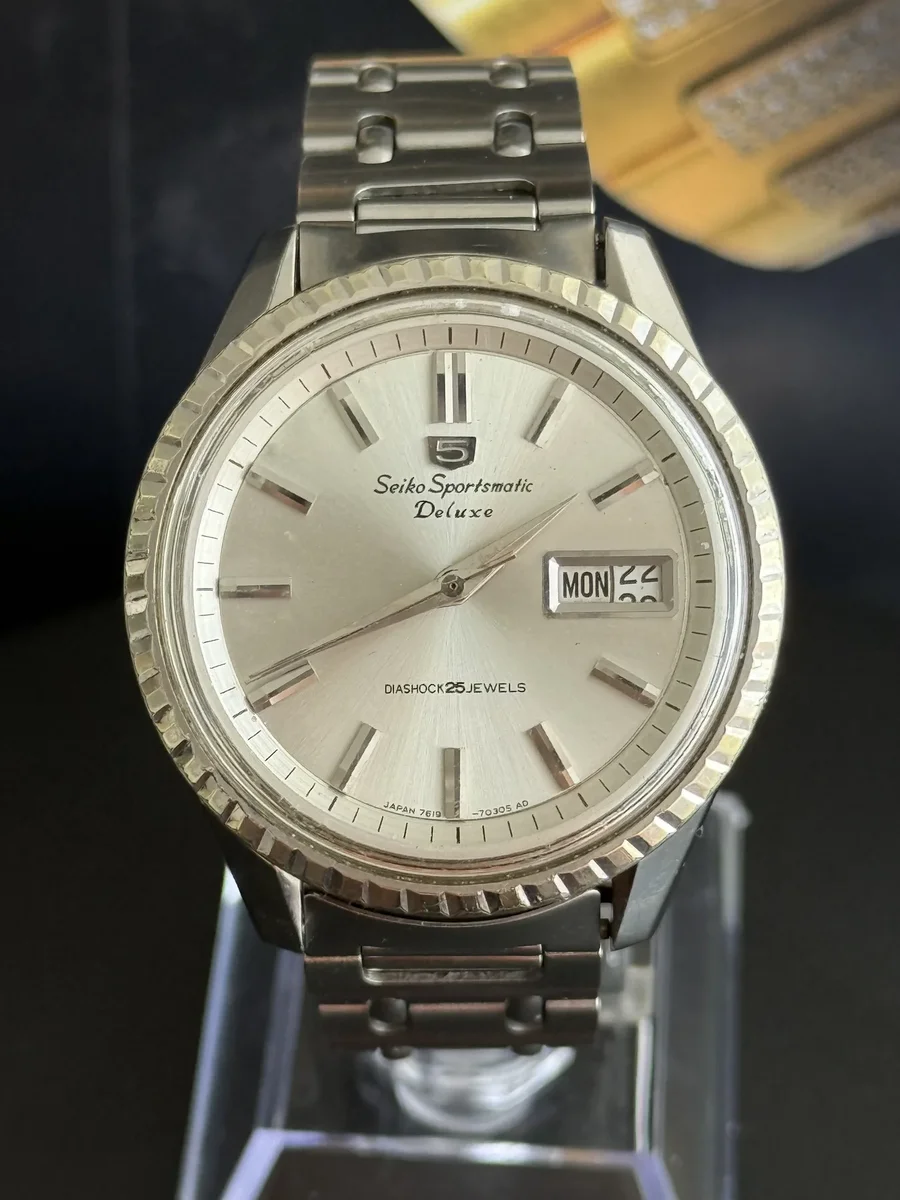
The premium tier of the Seiko 5 Sports line, from the mid-1960s — a fluted TWGP (Triple White Gold Plated) bezel, sharp and lustrous, that earned it the nickname "the poor man's Rolex Datejust" among collectors. 25 jewels, Diashock shock protection, and a full day/date with quick-set at the crown. Stainless steel case, roughly 37mm.
Coming soon — in transit from Japan
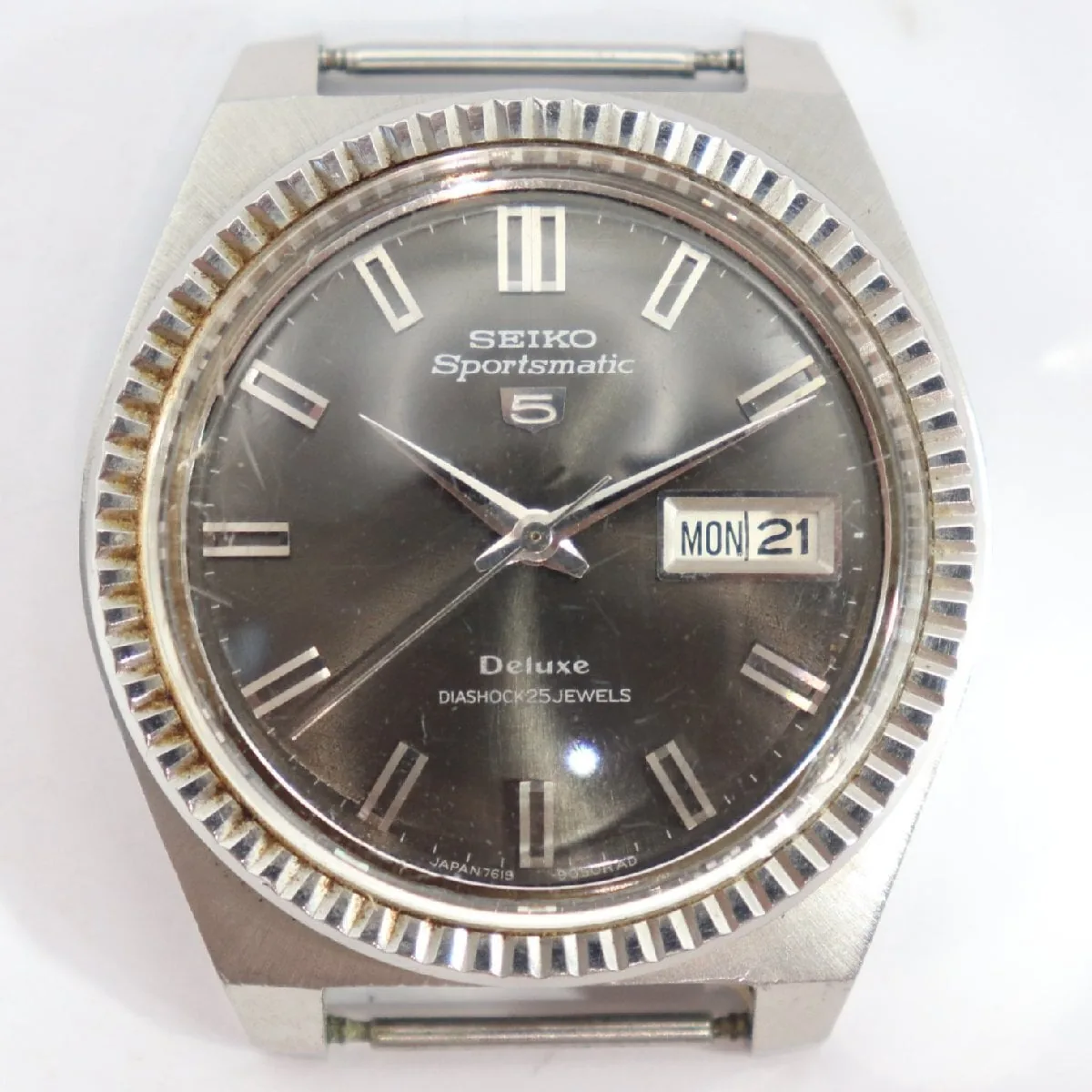
A March 1967 Seiko 5 Sportsmatic Deluxe, ref. 7619-9041, with a grey sunburst dial, a fluted coin-edge bezel, the 25-jewel calibre 7619A and a quick-set date pusher. A new crystal will be fitted before sale, and the price will be announced on arrival. Read the full story or see it in the shop.
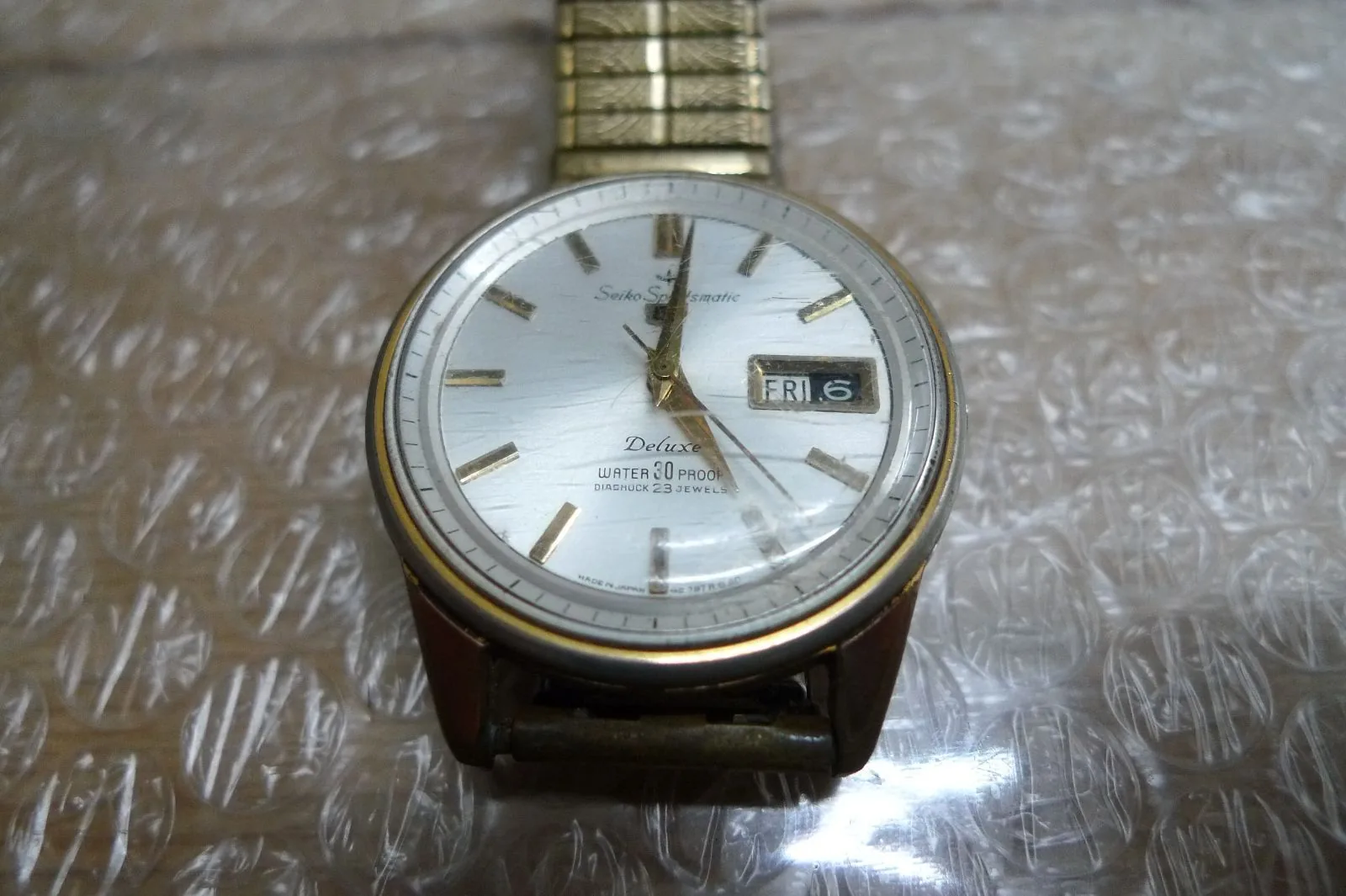
Also on its way: an early 1964 Seiko Sportsmatic 5 Deluxe with 23 jewels, a “Water 30 Proof” silver dial and a gold-plated case. A new crystal will be fitted before sale, and the price will be announced on arrival. Read the full story or see it in the shop.

The Seiko Liner — Suwa's Slim Dress Watch
 BUY NOW
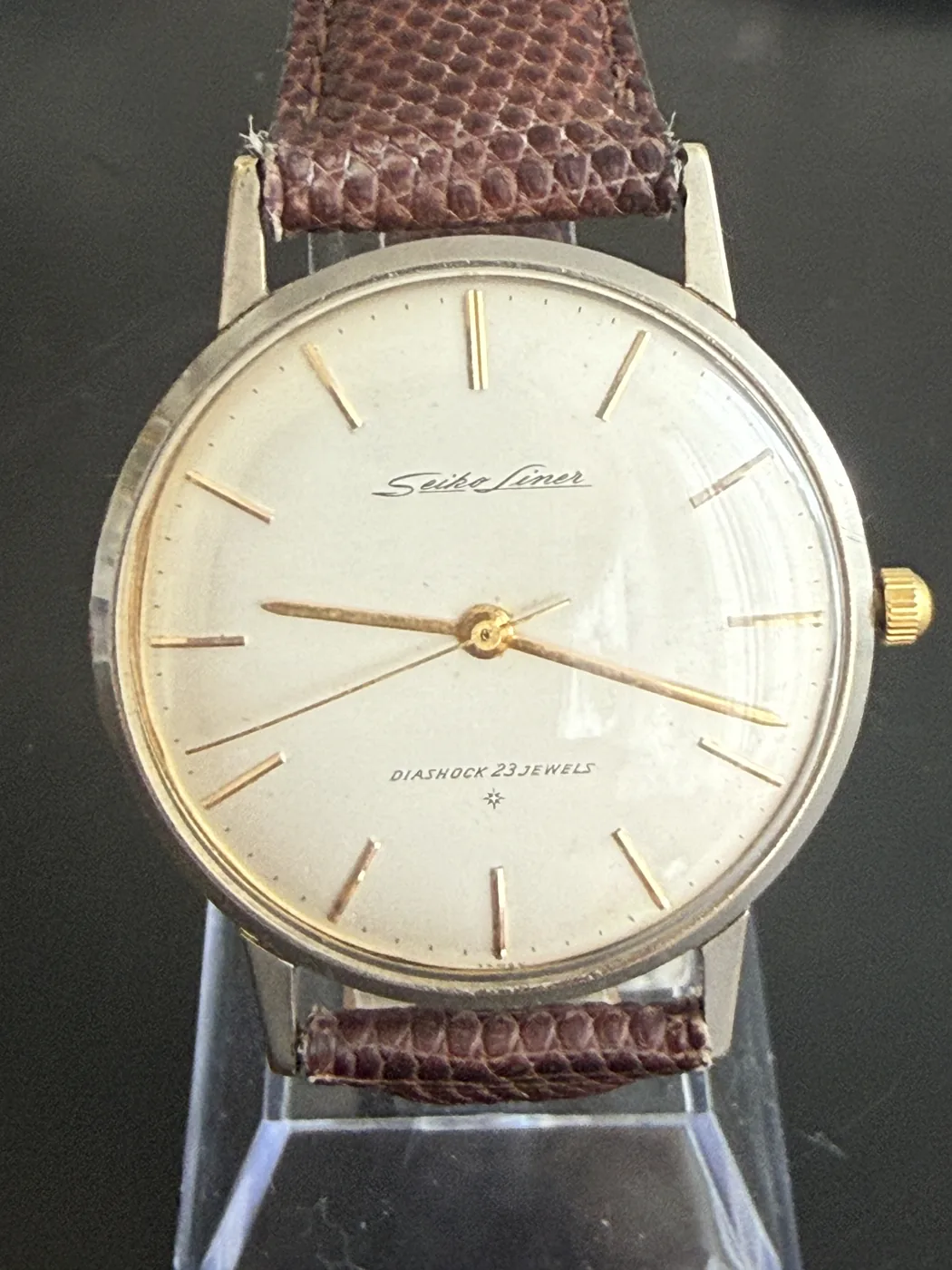
The Liner lived for only four years. Launched by Seiko's Suwa factory in 1960, it was a luxury dress line placed just below the first Grand Seiko. To make it truly slim, Suwa thinned down the 4.4mm Marvel movement into the 23-jewel caliber 3140, only 3mm high, and drew a thin bezel and fine, delicate lugs around it. A waterproof version followed in 1961 and a chronometer in 1963, but when Suwa turned to automatics the Liner was dropped — by 1964 it was gone. Dials came in several finishes, from plain silver to rare textured patterns; the best carry the 8-pointed SD star for solid gold markers.
In the shop now — this exact watch
Seiko Liner 23J, caliber 3140, SD “Special Dial” (June 1963) — €195: silver dial with solid gold applied batons, gold plated case with honest plating wear, 35mm.
Read the full story & buy → See it in the shop & all photos →
The Lord Marvel — Seiko's First Luxury Line, 1958–1978
The Hand-Wound Lord Marvel
Introduced in August 1958, the Lord Marvel is often considered the first true Japanese luxury watch. Rather than replacing the standard Marvel, it stood alongside it as a higher-end companion — sharing the same 25.6mm case diameter and 4.4mm movement thickness, but with the jewel count raised to 23 and a level of finishing and adjustment previously unseen from a domestic manufacturer. At launch it carried roughly double the price of any other Seiko wristwatch — a deliberate statement that this was Seiko's first genuine push into the luxury market, years before Grand Seiko or King Seiko existed. The "Lord" prefix marked it as the premium tier of the Marvel line, the same naming logic Seiko later reused for King Seiko and Grand Seiko. The line continued through several design updates until 1978; all Lord Marvels were JDM watches.
It was the first Japanese wristwatch fitted with a device to correct irregular balance oscillation without full disassembly, and one of the first to carry Seiko's new DiaShock anti-shock system, upgraded from the original S-1 to the more advanced S-2 within its first year. Every movement carried its own serial number — a novelty at the time — first as a four-digit production-batch code, later as a unique six-digit number. The investment paid off: in a year-long comparative accuracy trial run by Japan's Central Institute of Metrology, the Lord Marvel placed first among both domestic and imported Swiss watches, cementing its reputation as one of the most accurate mechanical watches of its era.
Lord Marvel — generations at a glance
1958–1959 — 1st Gen (Ref. 14056 / 14057): The original Lord Marvel, in stainless steel (14056) or 14k gold-filled (14057). 23-jewel hand-wound movement — cataloged simply as "Lord Marvel," with no separate caliber number of its own yet — in the rounded "hamaguri" (clamshell) case, four-digit movement serials.
1959–1964 — 1st Gen, later marks (Ref. J14038 / J14039 / J14050, then 15023 / 15027): Revised case added 14k gold-filled and 18k solid gold options alongside steel; DiaShock S-2 shock protection fitted; movements moved to unique six-digit serials. The closing 15023/15027 pair differ mainly in lug shape.
1964–1966 — 2nd Gen (Ref. 5740-1990, Cal. 5740A): A larger 36mm case, screw-down caseback and hacking seconds on a cleaner dial. Still 18,000 bph, but the direct technical preview of the first Grand Seiko a year later.
1967 – mid-1970s — 3rd Gen "Hi-Beat" (Ref. 5740-8000, Cal. 5740C): Seiko's first 36,000 bph movement — Japan's first and the world's second hi-beat caliber. Hand-wound, ~40-hour reserve, no hacking function, but the sharpest case of the line and today the most collected Lord Marvel reference.
Rare collector variants: linen-textured dials with applied numerals are especially prized for their scarcity and unusual surface; and a small number of "Imperial" Lord Marvels carry the 16-petal chrysanthemum — the official emblem of the Japanese Imperial Family — on the dial.
The line ran for roughly two decades before being eclipsed by the automatic Lord Matic and Grand Seiko ranges above it; the 1967 hi-beat 5740-8000 remains the best-documented and most sought-after reference today.
From our archive — two Lord Marvels we've had the pleasure of selling
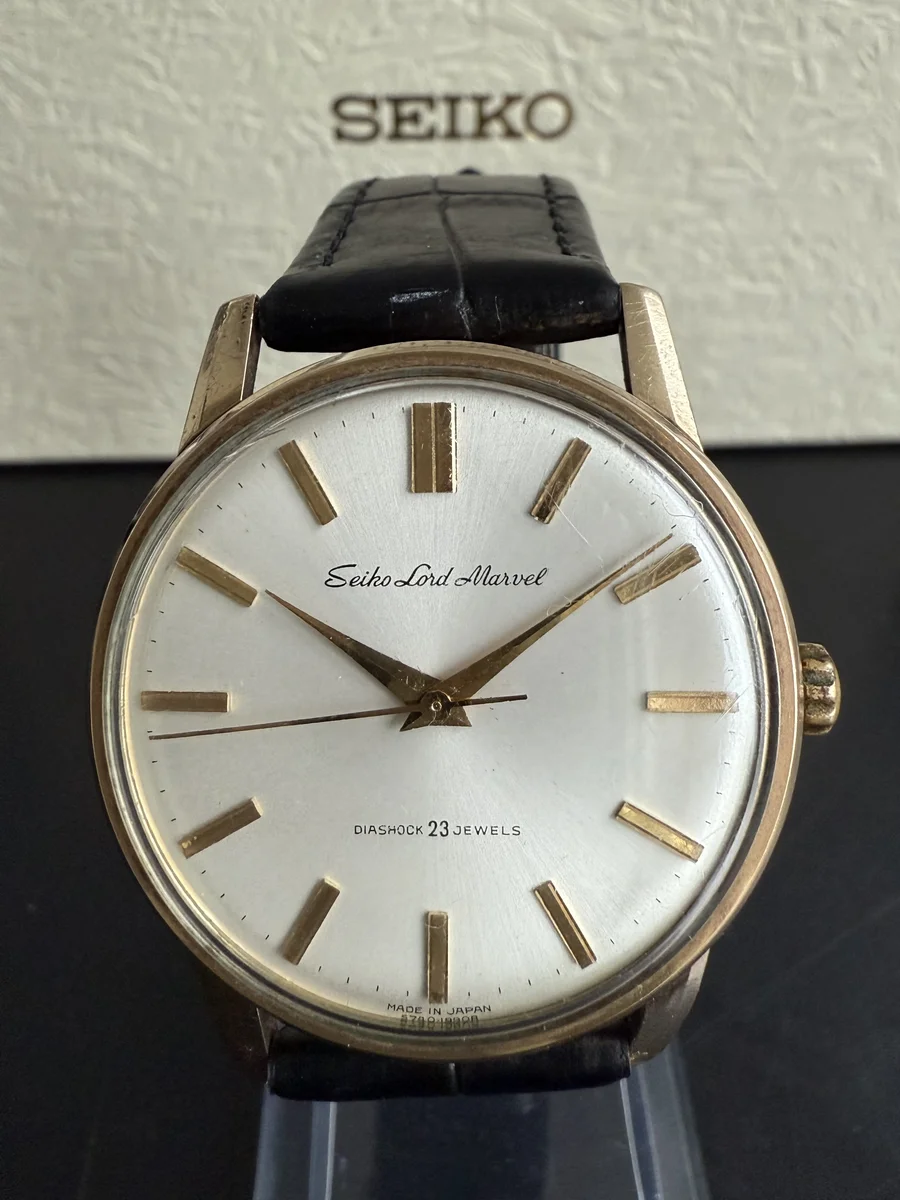
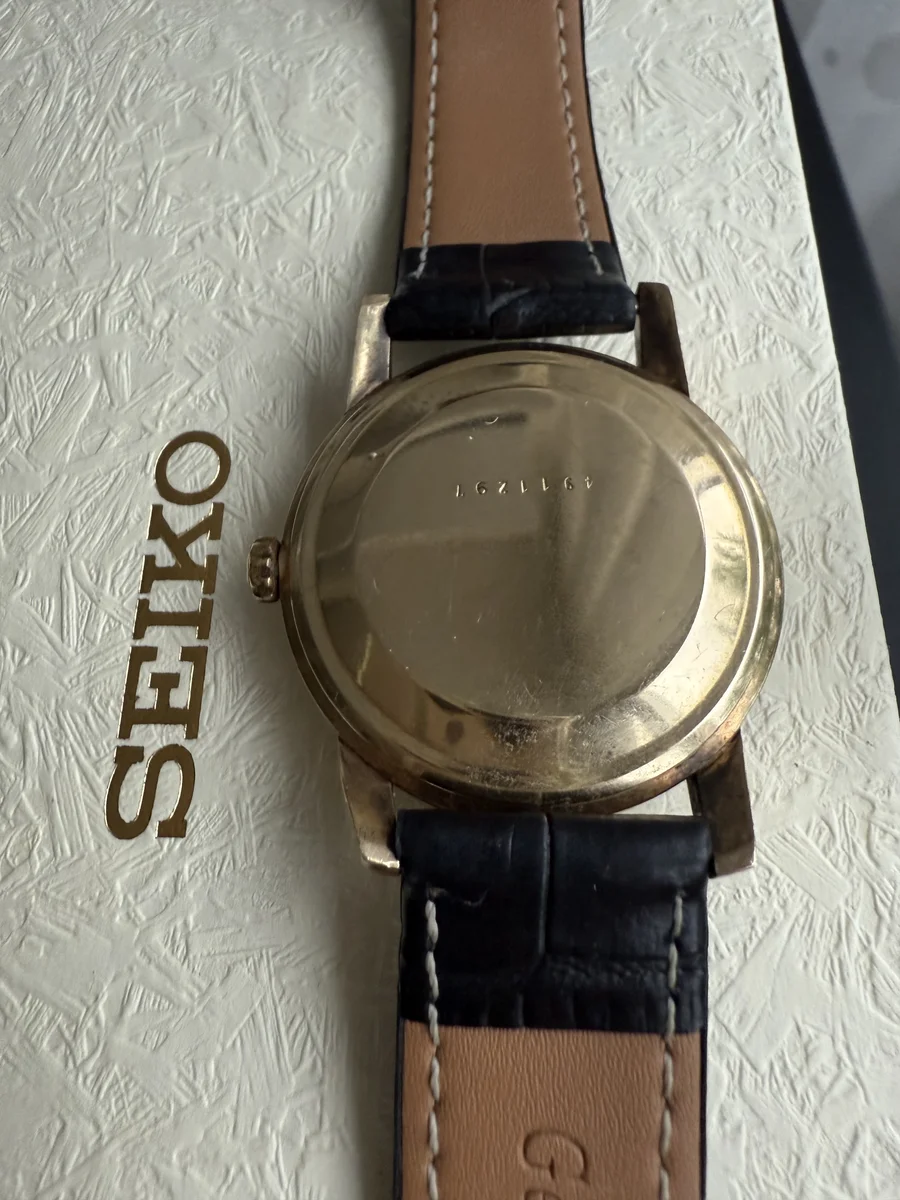
An early 23-jewel Lord Marvel from the first, engraved-logo generation (1958 – early 1960s) — 14k gold filled case, silvered dial with the cursive "Seiko Lord Marvel" script and "DiaShock 23 Jewels" printed below. The plain, unmarked caseback is typical of Seiko's early gold filled cases, which carried no external engraving at all — only the steel versions of the period did.
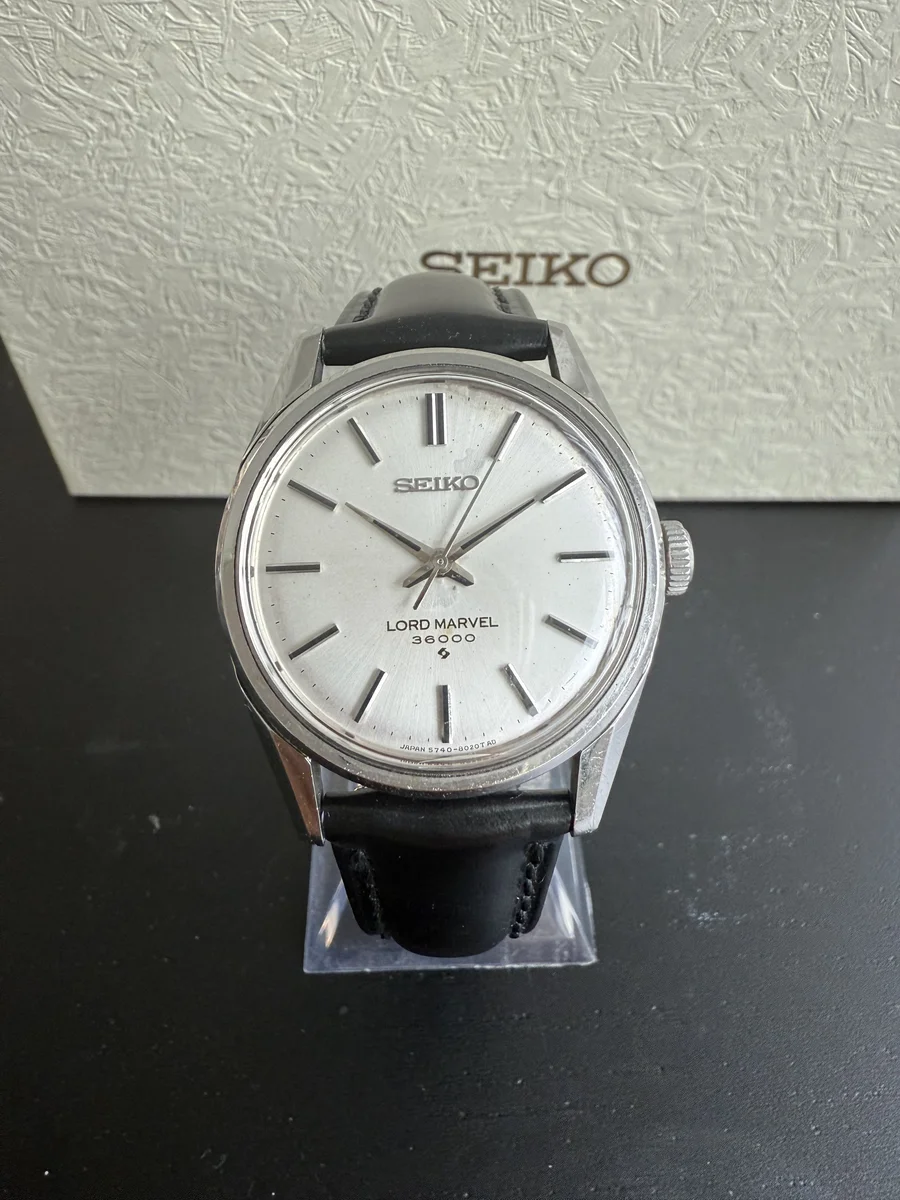
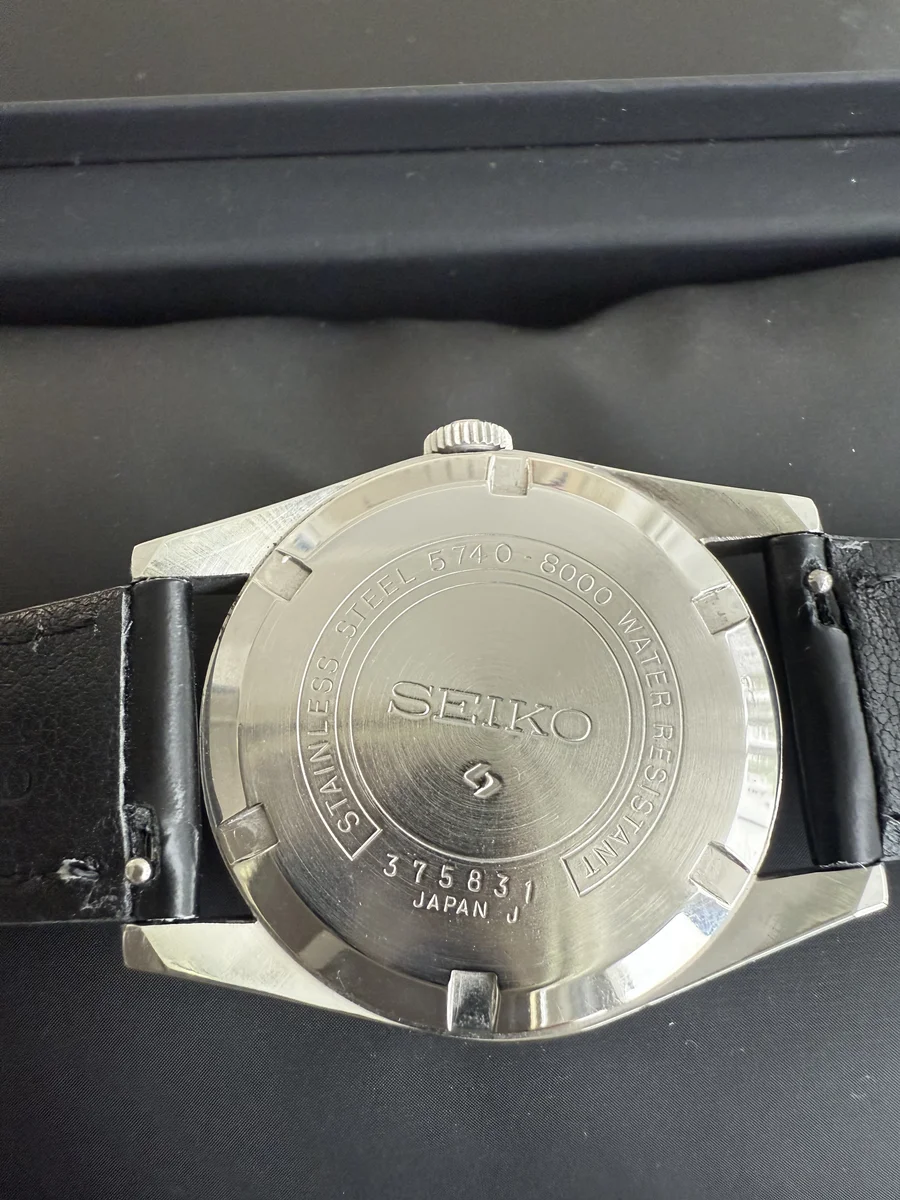
A Lord Marvel 36000 — the third-generation Lord Marvel, and arguably the most technically significant Seiko of its decade. Its manual-wind Caliber 5740C (ref. 5740-8000), introduced in 1967, was the first Japanese movement to beat at 36,000 vibrations per hour (10 beats per second), giving a noticeably smoother sweep of the seconds hand — only the second high-beat caliber in the world at the time, arriving just after Girard-Perregaux's 32A. Seiko deliberately proved the technology in the comparatively accessible Lord Marvel rather than risking it first on Grand Seiko or King Seiko; once it was shown to be robust, the same architecture fed straight into the hi-beat Grand Seiko and King Seiko calibers that followed — which is why collectors call this watch the "grandfather" of Grand Seiko.
The 5740C is hand-wound with roughly a 40-hour reserve and no hacking. Around a 35mm steel or gold-plated case with sharp-edged lugs; a silver dial in a sunburst or linen finish with faceted baton or applied Arabic-numeral indices; dauphine or sword hands, often with a black central stripe; a large unsigned winding crown; and a caseback carrying the Suwa factory mark with a J (domestic) or A (export) suffix. "36000" is spelled out on the dial as a badge of the movement inside.
The Lord Matic — Automatic Successor, 1968–1977
From Lord Marvel to Lord Matic
By the late 1960s, hand-wound movements were falling out of favor with buyers who wanted a watch that simply kept going on the wrist, and in 1968 Seiko retired the Lord Marvel in favor of the Lord Matic — a fully automatic line carrying the same "Lord" prestige branding forward. The name followed Seiko's established shorthand: just as "Seikomatic" and "Sportsmatic" used "-matic" to mean automatic, "Lord Matic" simply paired that shorthand with the Lord Marvel's premium "Lord" name. Pitched at ambitious professionals — contemporary advertising called it a watch for "men on their way to the top" — it filled the mid-to-high tier just below King Seiko and Grand Seiko, the same market position the Lord Marvel had held before it.
The range split into two closely related families, built at two different Seiko factories. The standard Lord Matic, made by Suwa Seikosha, ran calibers 5601, 5605 and 5606 — 21,600 bph, 23 or 25 jewels, with the 5606 adding a day-date complication and both manual and automatic winding. From around 1971, Daini Seikosha added the Lord Matic Special above it, fitted with the higher-beat 5206 and later 5216 calibers at 28,800 bph, with finer finishing to match the higher position. Early Lord Matics kept the Lord Marvel's restrained, formal dress styling; from 1970 onward, design shifted with the times toward bolder "casual" looks — colored dials, faceted crystals and less conventional case shapes — resulting in more than fifty distinct references across the line's nine-year run.
That factory split wasn't cosmetic — it came from a rivalry built into Seiko's own structure. Suwa and Daini were run as competing manufacturing arms company-wide, the same dynamic that produced Grand Seiko (Suwa, 1960) and King Seiko (Daini, 1961) one tier up: Suwa chasing raw accuracy, Daini chasing finishing and mechanical refinement. At the Lord Matic level that meant a real, felt difference rather than just a spec-sheet one. The Special's higher 28,800 bph beat gave it a visibly smoother sweep of the seconds hand and a generally sturdier date-change mechanism than the Suwa 5606, whose own manual warned against quick-correcting the date between 10pm and 3am. Seiko even graded the two to different official accuracy standards: "B" (−10/+15 sec/day) for the Special against "C" (−15/+25 sec/day) for the standard Lord Matic.
Lord Matic — generations at a glance
1968–1970 — Early Lord Matic (Suwa, Cal. 5601 / 5605 / 5606): Classical dress design carried over from the Lord Marvel era. 21,600 bph, 23–25 jewels, accuracy grade "C" (−15/+25 sec/day); the 5606 added day-date with quick-set correction (best avoided between 10pm–3am, per Seiko's own warning, to avoid damaging its date-change mechanism).
c.1971 onward — Lord Matic Special (Daini, Cal. 5206 → 5216): A higher-positioned parallel line built by Seiko's rival Daini factory, day-date only, beating at 28,800 bph, accuracy grade "B" (−10/+15 sec/day) — a tighter tolerance and finer finishing than the standard Lord Matic. Final Special references used the updated Cal. 5216B.
1970–1977 — The "casual" years: Design broke from formal dress conventions toward 1970s tastes — colored dials, faceted crystals, unconventional case shapes including the whimsical "UFO"-style cases collectors nickname today — across a sprawling range of over fifty references.
Production ended in 1977 with no direct mechanical successor — by then Seiko's attention, and its engineering priority, had shifted decisively to quartz.
An early Lord Matic pair
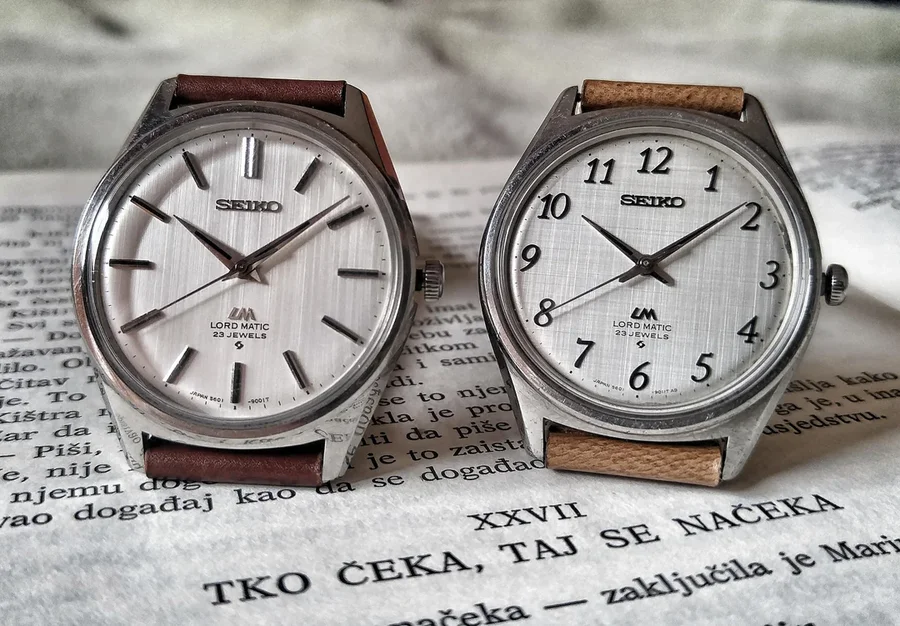
Two early Suwa-made Lord Matics, 23 jewels, side by side — one with the original stick-and-baton dial, the other a later re-dial with Arabic numerals. Both still carry the restrained, formal dress styling inherited directly from the Lord Marvel, before the line's design turned bolder and more colorful after 1970.
Now in the shop

Seiko Lord Matic Special 5216-6040 (August 1973) — Daini's higher-beat Caliber 5216A line, in a striped brown and gold-bronze dial, light in the centre and shading into darker hues, in the typical brownish hue of the 1970s disco age: pure "casual" Lord Matic, a world away from the restrained dress styling of the early pair above. Day-date, 23 jewels, 28,800 bph, hacking seconds, new crystal, original LM bracelet (one link missing, no effect on normal wear). €495.
Crown & Crown Special
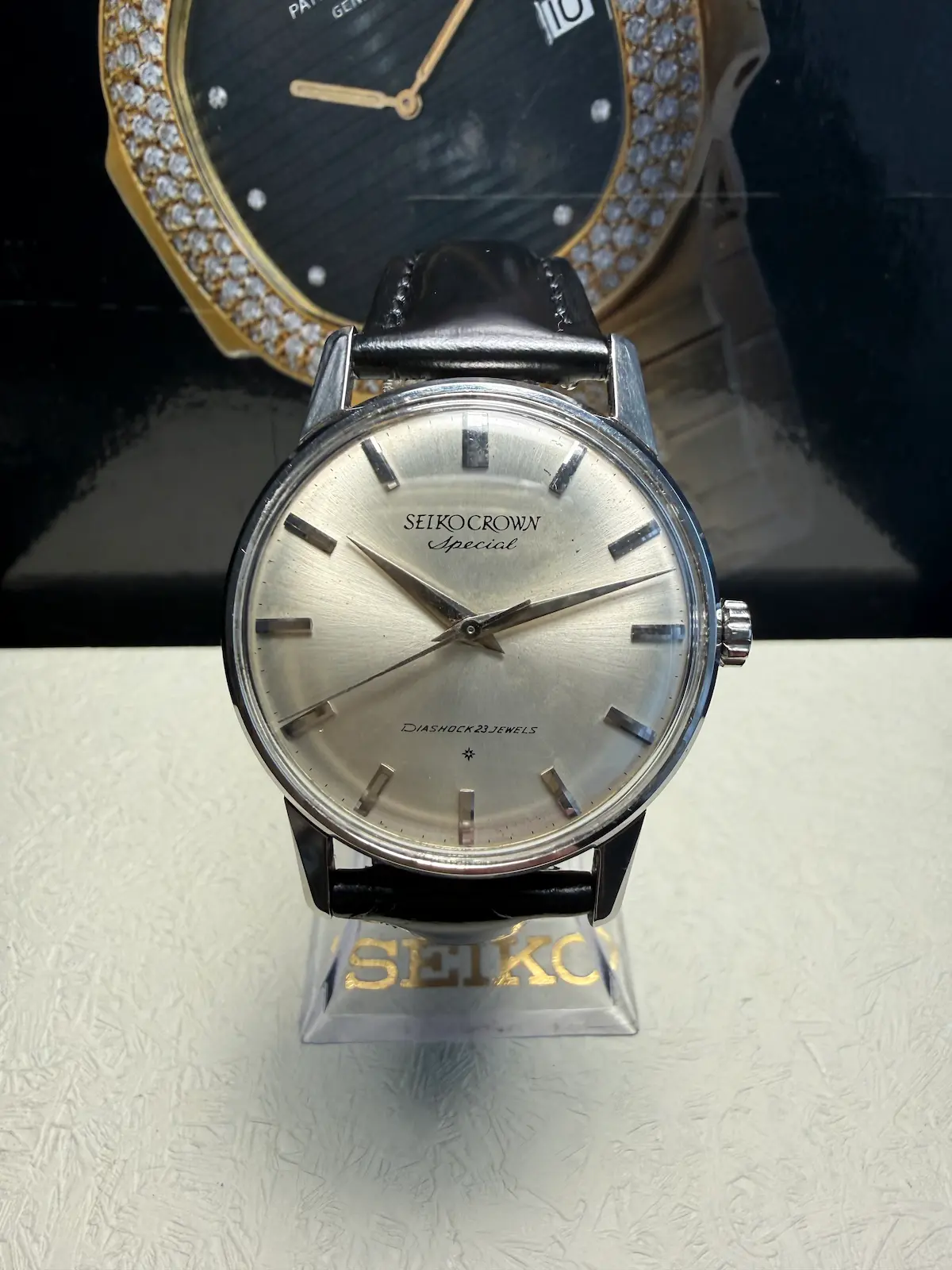 BUY NOW
The Seiko Crown was Suwa Seikosha's March 1959 successor to the Marvel — a manual-wind watch built expressly to bring Japanese watchmaking up to international precision standards. It took the Marvel's in-house architecture and scaled it up: a larger 12½-ligne movement (from 11½), with a bigger balance wheel and an enlarged mainspring barrel for more torque and steadier timekeeping. The standard Crown stayed in production from 1959 until at least December 1965.
That architecture proved solid and accurate enough that Seiko used it as the direct engineering foundation for the very first Grand Seiko (ref. 3180) in 1960, built at the same Suwa factory in Nagano — a watch set to a standard stricter than the era's highest, and marketed as the finest in the world.
Once Grand Seiko existed, Seiko fed its high-end improvements back down into the regular line as the Crown Special (Caliber 341) — a more refined, higher-jewel variant that sits directly between the Grand Seiko and the standard Crown, often described as a Crown on Grand Seiko steroids. It adds Diafix-jeweled bearings for every wheel in the going train, raising the jewel count to 23 against 19–21 for the regular Crown and 25 for the Grand Seiko 3180.
The Crown name also carried Seiko's first chronograph. For the 1964 Tokyo Olympic Games, where Seiko served as official timekeeper, the company launched Japan's first homegrown chronograph — the mono-pusher Crown Chronograph, built around a column wheel.
History via the Seiko Museum and Beyond the Dial's Crown Special collector guide.
Coming soon — in transit from Japan
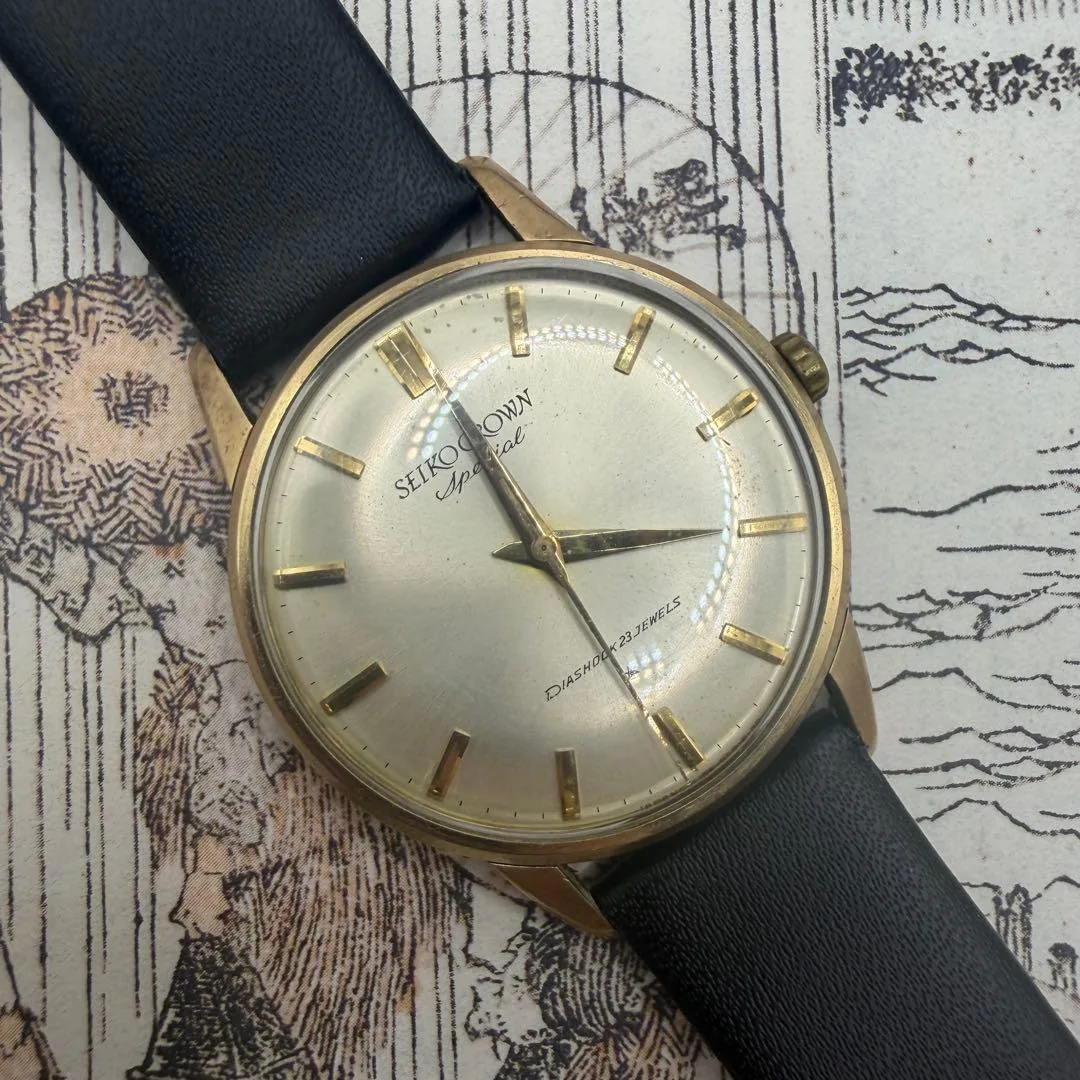
A Seiko Crown Special 15021 23J in a 14K gold-filled case (36 mm), with a silver dial, applied gold indices and the 8-pointed SD star. It is on its way from Japan, and the price will be announced on arrival. Read the full story or see it in the shop.
King Seiko — Born in Kameido
The first King Seiko was built in 1960 at the Daini factory from the 54A movement of the Seiko Chronos, lasting until 1963. The majority were gold plated with solid gold hands and markers. King Seiko was born as Daini's answer to Suwa's Grand Seiko — made with the aim of offering high-quality timepieces to a larger population at different price segments.
King Seiko — Second Generation & Hi-Beat
The second generation King Seiko (44KS) was based on the new Caliber 44A, introduced in 1964. It spawned the famous Grand Seiko 44GS, sharing a movement and factory.
From our archive — a King Seiko 5626-5060 we've had the pleasure of selling
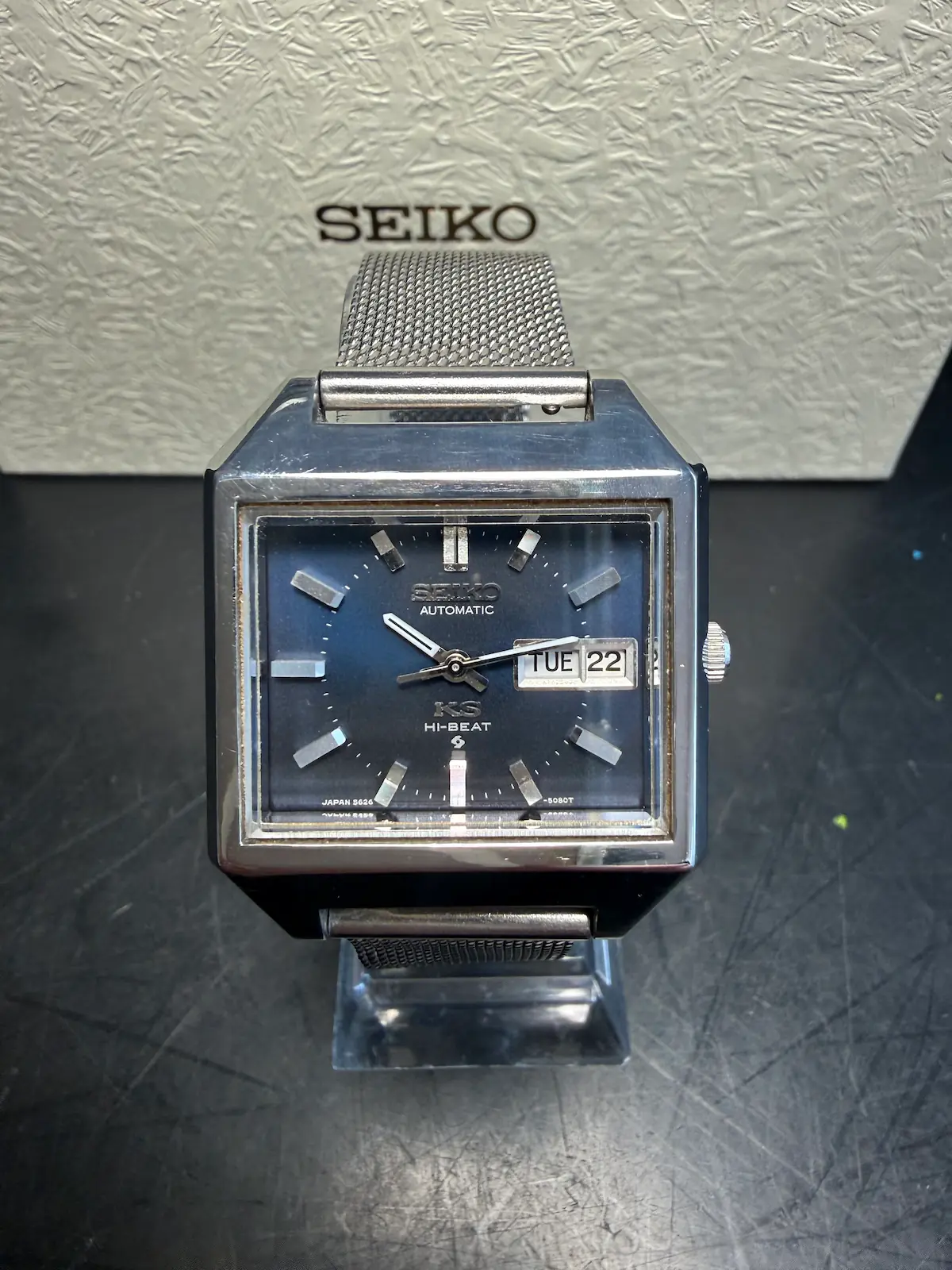 SOLD
King Seiko 5626-5060 25J Hi-Beat, JDM TV model (1972) — sold. Read the full story →
From our archive — a King Seiko we've had the pleasure of selling
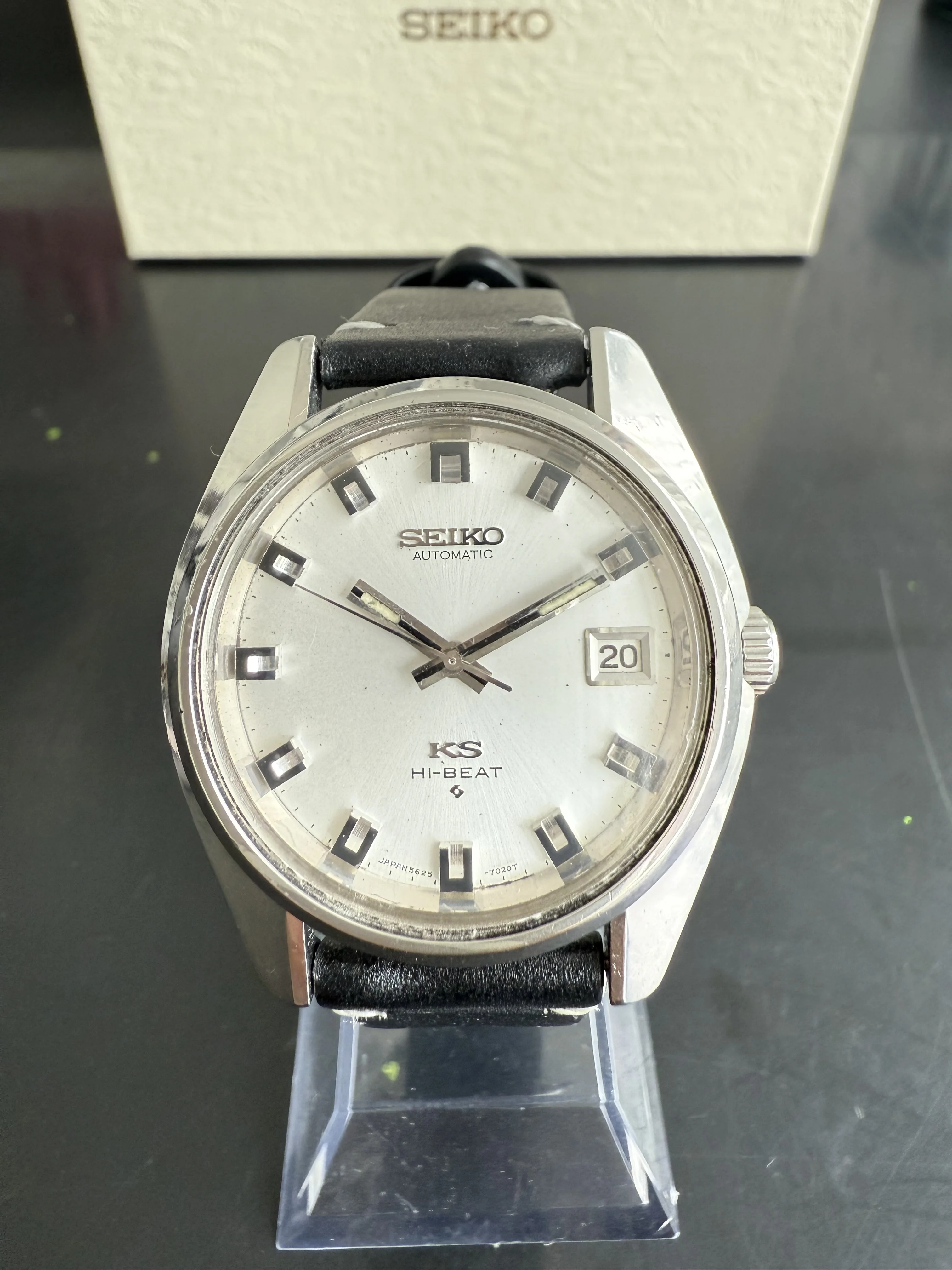
A June 1969 King Seiko 5625-7000 Hi-Beat from the Suwa Seikosha factory (serial 960574), and the desirable "Blocky" dial variant — far rarer than the standard stick-marker version. Massive applied rectangular indices with black tops and matching blunt baton hands replace the usual dauphine set, giving the silver sunburst dial real depth. It retains its original flat Hardlex crystal, an unpolished monobloc 37mm steel case, and a caseback with the original 14k gold "KS" medallion in crisp, excellent condition.
Grand Seiko — The Golden Era
The 44GS series, developed by Daini Seikosha, introduced the "Grammar of Design" guidelines: flat surfaces and geometrically perfect angles to best reflect light, mirror-polished faceted bezels, no distortion, recognisable cases with original designs. The 61GS (1968) was Japan's first self-winding 10-beat watch. The 56GS (1970) tackled size reduction — at just 4.5mm height while retaining high precision, making it the last of the vintage Grand Seiko series with 35 different models.
The Advan — Bold Youth in Color, c.1970–1976
Seiko Advan — Bold Youth, Loud Color
Seiko launched the Advan (アドバン, katakana for "Advance") as a deliberate break from watch tradition, and the marketing said so outright: period advertising for the line carried the tagline "大胆に若さを主張する" — "Boldly assert your youth." The ads pictured young men in swim trunks and open shirts strolling a beach, not executives at a desk — a calculated pivot toward the leisure-driven, unisex-casual fashion sweeping Japan through the disco years of 1970–78, when platform shoes, wide collars and loud color-blocking were replacing the buttoned-up conservatism of the previous decade.
The watch itself was built to match that mood. Seiko's own copy promised a "強烈な個性のカット・ハードレックス・ガラス、多重色カラー・ダイヤル" — an intensely individualistic cut Hardlex crystal and multi-toned color dial — explicitly breaking with "the previous image of the wristwatch." Where a 1960s dress watch aimed for restraint, the Advan aimed for spectacle: sunburst dials in blue, green or amber, faceted "jewel-cut" crystals that threw prisms of light as the wrist moved, and a bold sunburst emblem stamped right on the dial as the line's signature — the ad literally told buyers "the sun mark on the dial" is what to look for. Even the spec sheet leaned into modern convenience over old-world formality: automatic winding, day/date with quick-change correction, and a day wheel that switched between Japanese and English.
It's a watch built for the same cultural moment as bell-bottoms and beach photography — not in spite of being a Seiko, but because Seiko, more than any other watchmaker of the era, was willing to let a watch be fun.
The range's real idea was permission — Seiko let its designers do things a conservative dress watch never could. Specialist dealer Watch & Vintage, who have documented the line in depth, count somewhere between 30 and 40 distinct dial and case designs across the run: gradient sunburst dials, two-tone dials, asymmetric cases, and hour markers cut into shapes no other Seiko line used — sometimes several of those tricks stacked on a single watch, very much in step with the space-age design mood of the early '70s. Cases were stainless steel, occasionally gold-plated, always on a metal bracelet with a glass crystal. Every model carried the same house mark: a red sunburst fused with the word "advan" set in a deliberately futuristic typeface, printed either straight onto the dial or on the underside of the crystal itself.
Underneath the flashy exterior, the engineering was pure Seiko 5 — the same everyday backbone shared with the standard Seiko 5 and Seiko 5 Actus lines of the period. Three calibers covered the whole range: the 25-jewel 6106C, the 21-jewel 7019 fitted to the watch below, and the rarer 21-jewel 7039. All three gave the same automatic day/date formula — proof that the Advan's real ambition lived entirely in its design, not its movement.
Range & design history via Watch & Vintage — The Seiko Advan Range.
Seiko Advan 7019-7260 — Automatic Day/Date 21J
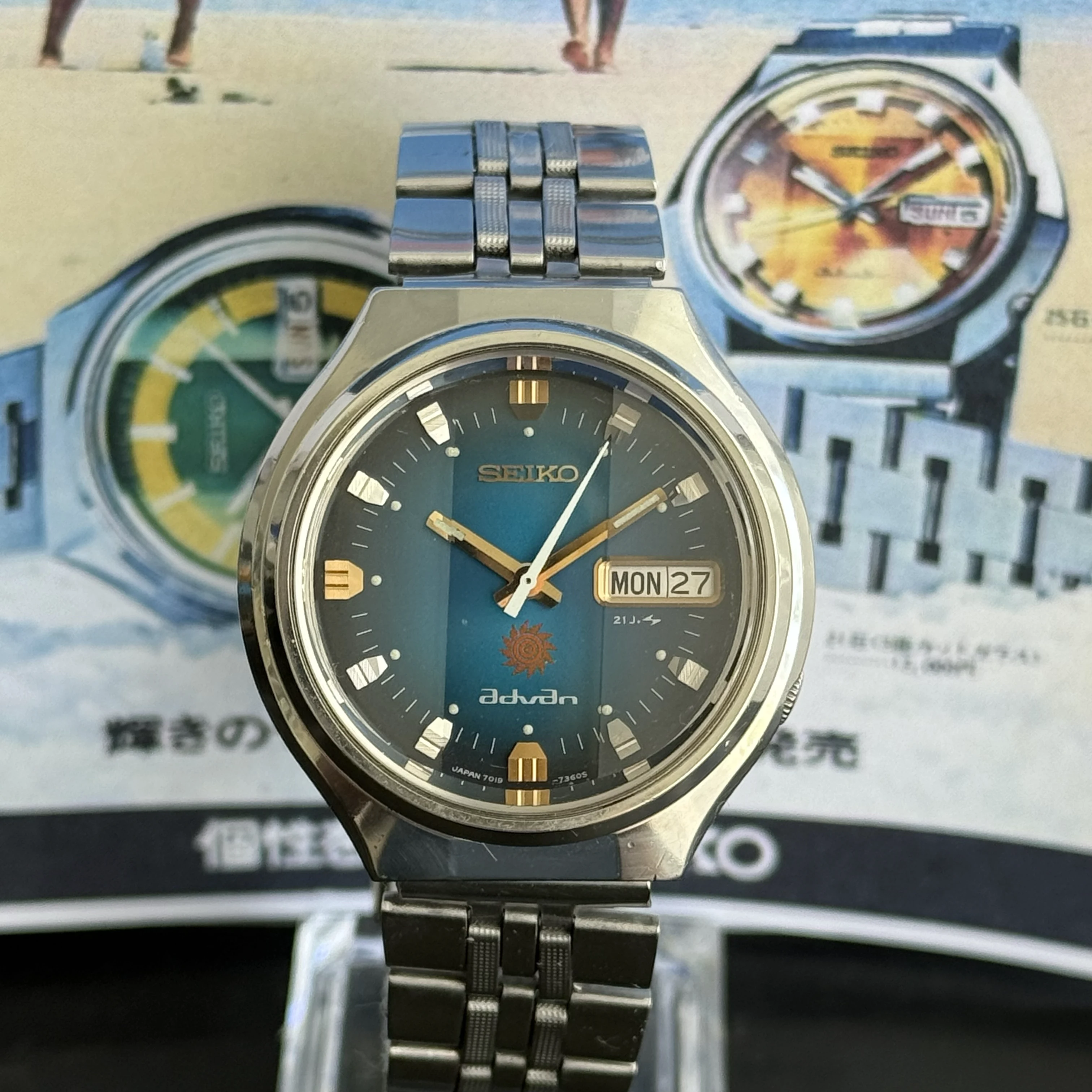
A stainless-steel Advan, reference 7019-7260, on its original Seiko bracelet. A rich sunburst dial runs from deep marine blue at the edges into a lighter, glowing blue at the center, under a new faceted Hardlex crystal — the "cut glass" novelty Seiko marketed as the Advan's signature party trick. Gold faceted trapezoid indices and gold dauphine hands sit above the orange sunburst house mark at 6 o'clock, exactly the "sun mark on the dial" the original advertising told buyers to look for. Automatic caliber 7019A, 21 jewels, day/date at 3 o'clock with quickset correction.
From our archive — a Seiko Advan we've had the pleasure of selling
Coming soon — in transit from Japan: a Seiko 5 Actus
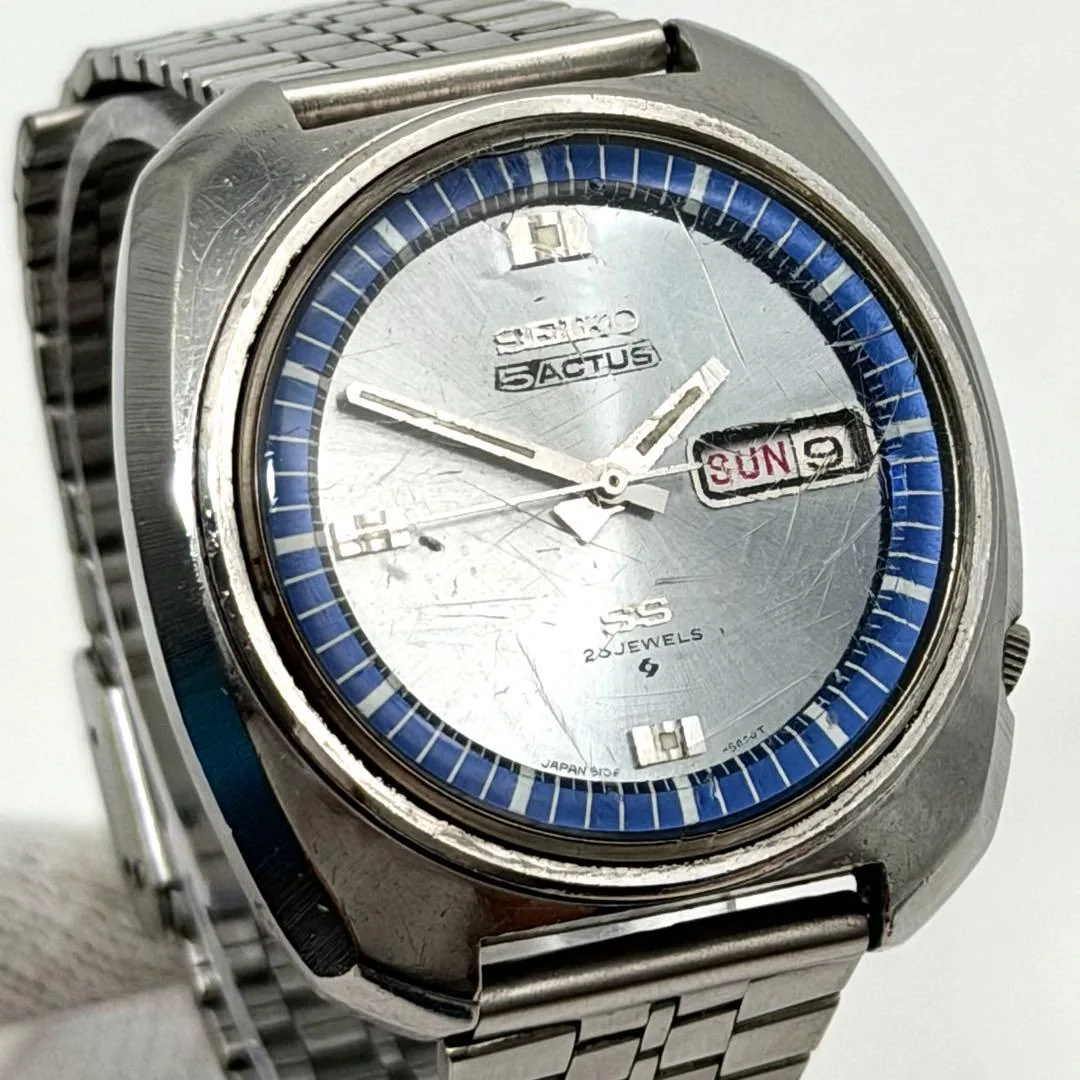
From the same Seiko 5 backbone as the Advan: a June 1969 Seiko 5 Actus SS, ref. 6106-6400, with the 25-jewel calibre 6106, a silver sunray dial with a blue inner ring and a round cushion case. A new crystal will be fitted before sale, and the price will be announced on arrival. Read the full story or see it in the shop.
Coming soon — in transit from Japan: a Seiko 5 Sports
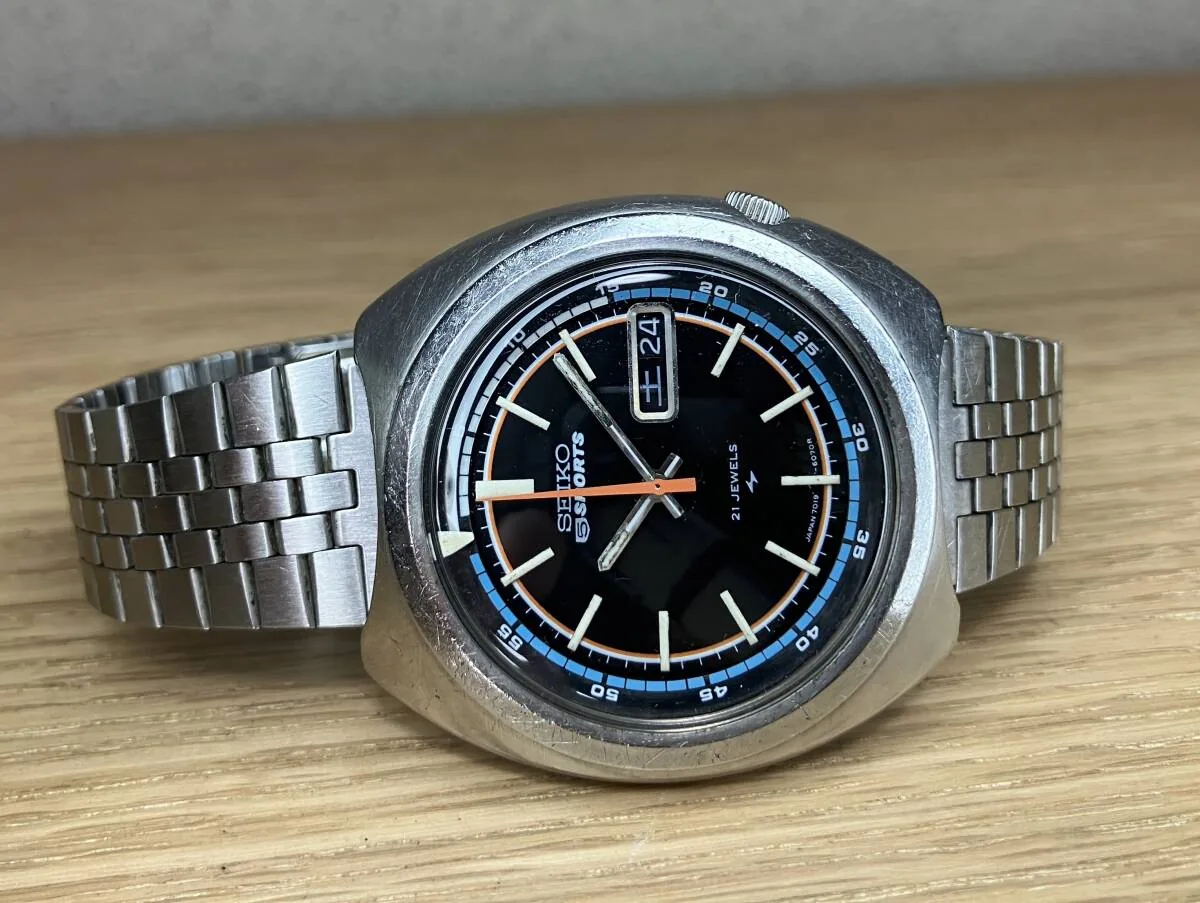
Powered by the same 21-jewel calibre 7019 as the Advan: a Seiko 5 Sports, ref. 7019-6040, from the early 1970s. It has a black dial, a blue rotating inner ring and an orange seconds hand. The price will be announced on arrival. Read the full story or see it in the shop.
Ladies' Hi-Beat — Caliber 2706, 1970s
Ladies' Hi-Beat — Caliber 2706
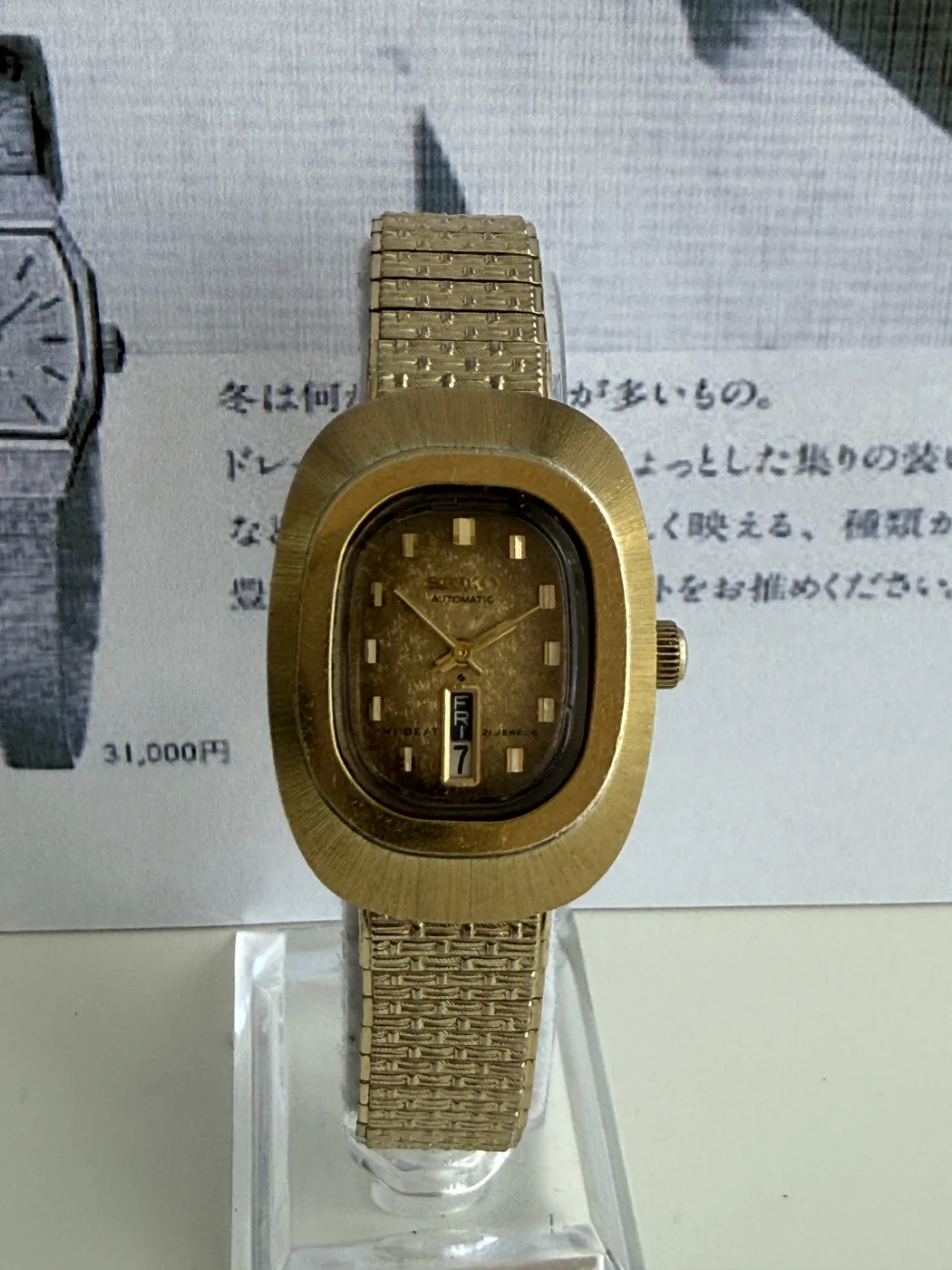
In the 1970s Seiko brought its Hi-Beat technology to ladies' watches. The caliber 2706 is a tiny automatic, just 17.2 mm across, beating at 28,800 bph with 21 jewels, Diashock and a day/date quickset — a full men's-grade specification in a lady's size.
Seiko 2706-7070 Ladies' Hi-Beat (June 1974) — gold-plated cushion case with a stainless steel back, textured gold dial with applied gold markers and a vertical day/date window. €195.
The Turtle — Seiko's Cushion Diver, 1965–1988
The 62MAS, the Turtle & the Slim Turtle
1965: The 62MAS — Where It All Began
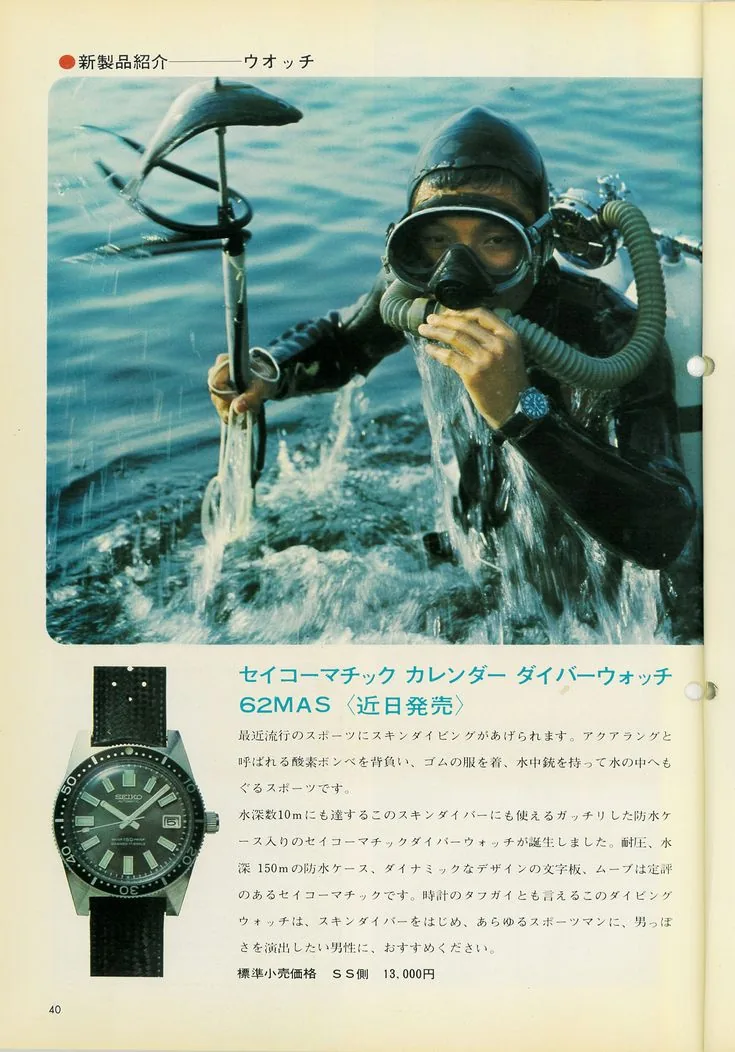
Every Seiko diver, the Turtle included, goes back to one watch: the 62MAS of 1965, Seiko's first diver's watch and Japan's first. The name tells you what it is: a 62-series Seikomatic movement, Automatic winding and a Self-dater. Inside was the caliber 6217, 17 jewels. The steel case was only about 37 mm across, but it was water resistant to 150 metres, with a rotating bezel, a date at 3 and big luminous markers. The Japanese “coming soon” page shown here priced it at ¥13,000.
From 1966 the 62MAS went south with the Japanese Antarctic Research Expedition and proved that a Japanese watch could survive cold, pressure and hard work. It was only made until 1968, which makes a good original rare today. Its recipe — strong steel case, rotating bezel, big lume and 150 m at a fair price — became the basis of every Seiko diver that followed, the Turtle included.
1976–1988: The Turtle & the Slim Turtle
In August 1976 Seiko presented a big, cushion-shaped automatic diver in Japan, the 6306 (21 jewels, hacking), and the same year the export version followed: the 6309-7040, with the simpler 17-jewel caliber 6309. Its rounded case looked like a turtle shell, and collectors have called it the “Turtle” ever since. In 1982 Seiko added a smaller sister for the export market: the 6309-729x, with the same 6309 movement, day-date and 150 m diver look in a slimmer, more angular case. Collectors call it the Slim Turtle. Both were made until 1988.
Read the whole Seiko Turtle story, 1965 to today →
Seiko 6309-7290 “Slim Turtle” — October 1986
 BUY NOW
This one left the factory in October 1986. It has the classic navy-and-red Pepsi bezel, fat lume plots, the arrow-tipped minute hand and Seiko’s tsunami wave on the caseback. Caliber 6309A, 17 jewels, and still ticking along almost 40 years later. Priced at €495.
In the shop now — this exact watch
Read the full story & buy → See it in the shop & all photos →
From our archive — two Slim Turtles we've had the pleasure of selling
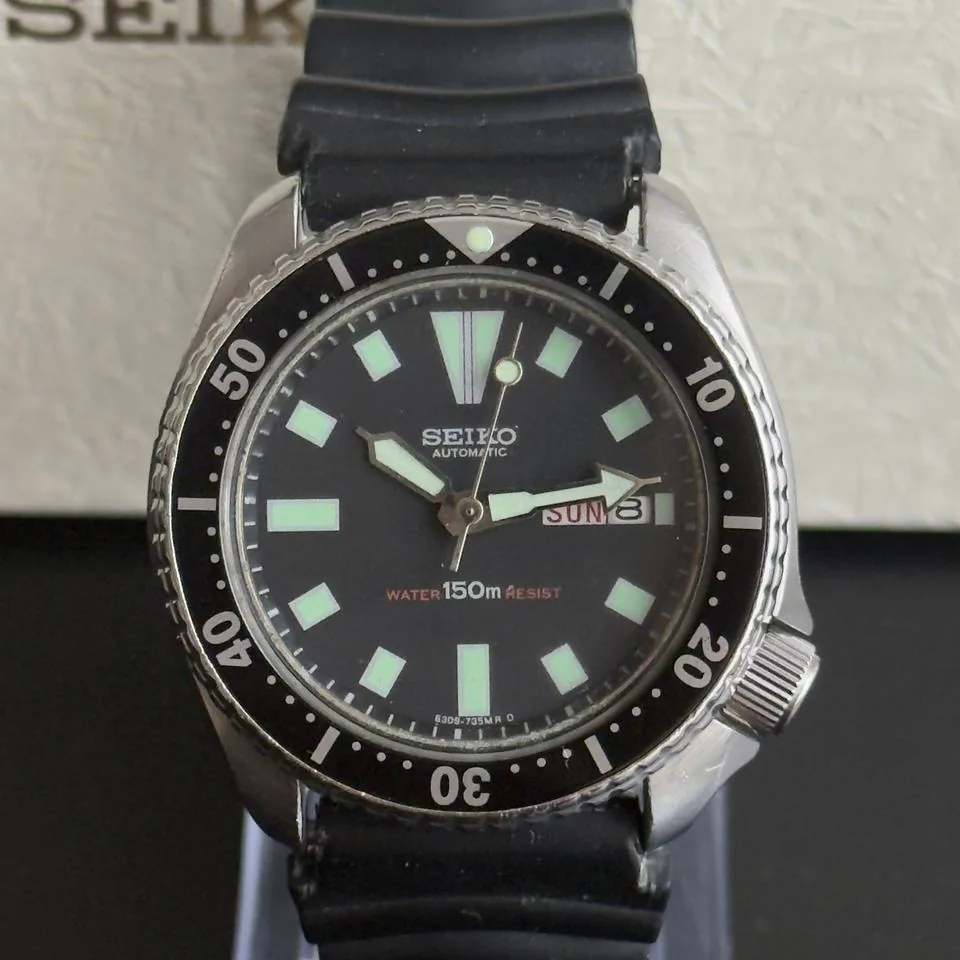
Seiko 6309-729A Slim Turtle, November 1987 (black). Serial 7N0275 — a late-production example with the 6309-735M R dial, its lume aged to a soft cream colour. All original, imported from Japan, unpolished and on its original strap. Sold.
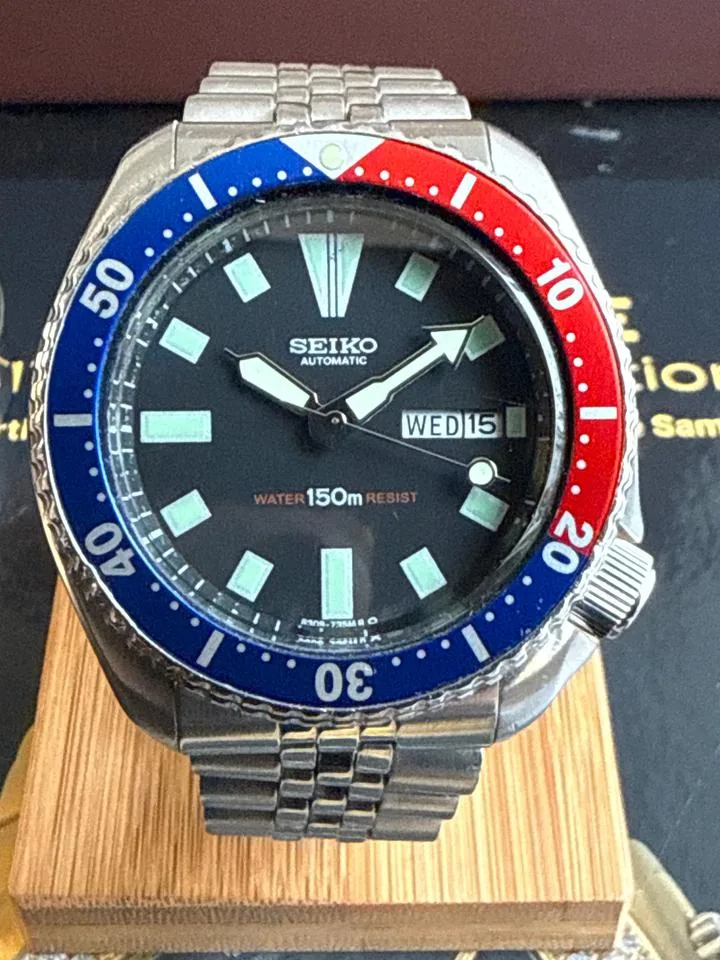
Seiko 6309-729A Slim Turtle, 1987 (Pepsi). Imported from a Japanese watch shop, in very good condition with hardly a hairline on the case. It wore a navy-and-red Pepsi bezel insert and a matching Seiko Jubilee bracelet, and the caseback shows it had been serviced several times over the years. Sold.
Seiko Fairway J13048 — Pioneer of Diver DNA
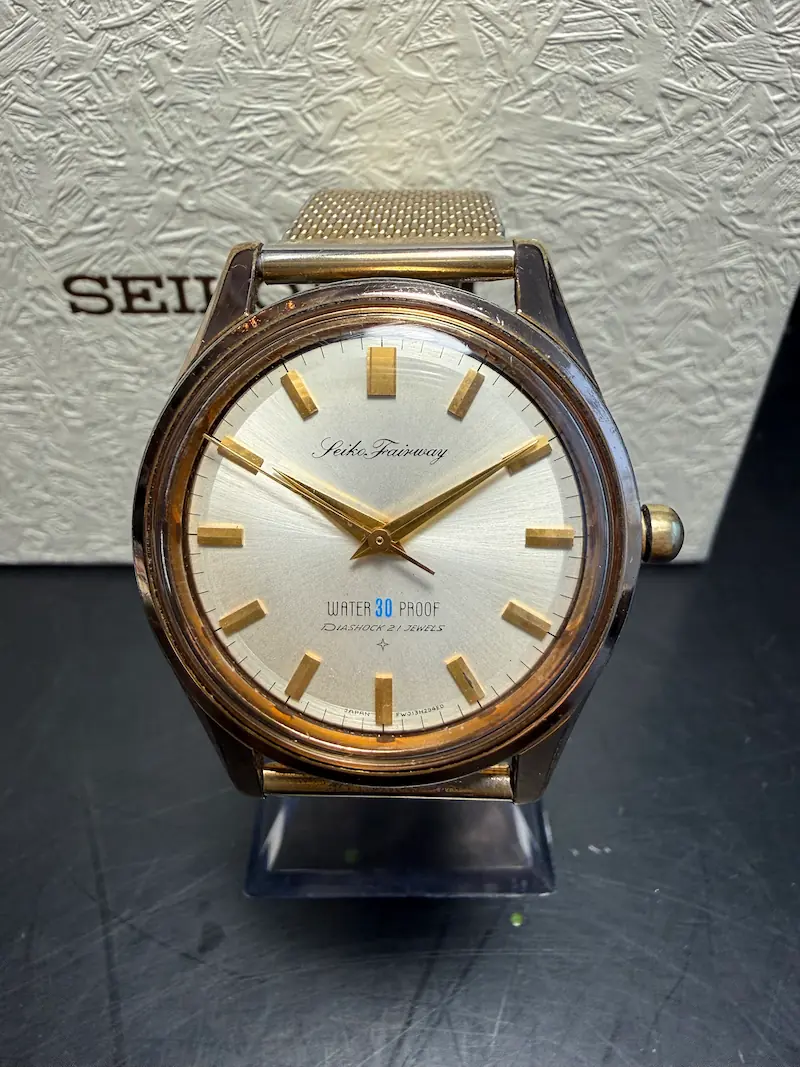
At first glance a simple dress watch, but in 1963 the Seiko Fairway J13048 was a bold technical experiment — Seiko's first known attempt at a one-piece waterproof case, pre-dating their iconic dive watches.
From our archive — a Seiko Fairway we've had the pleasure of selling
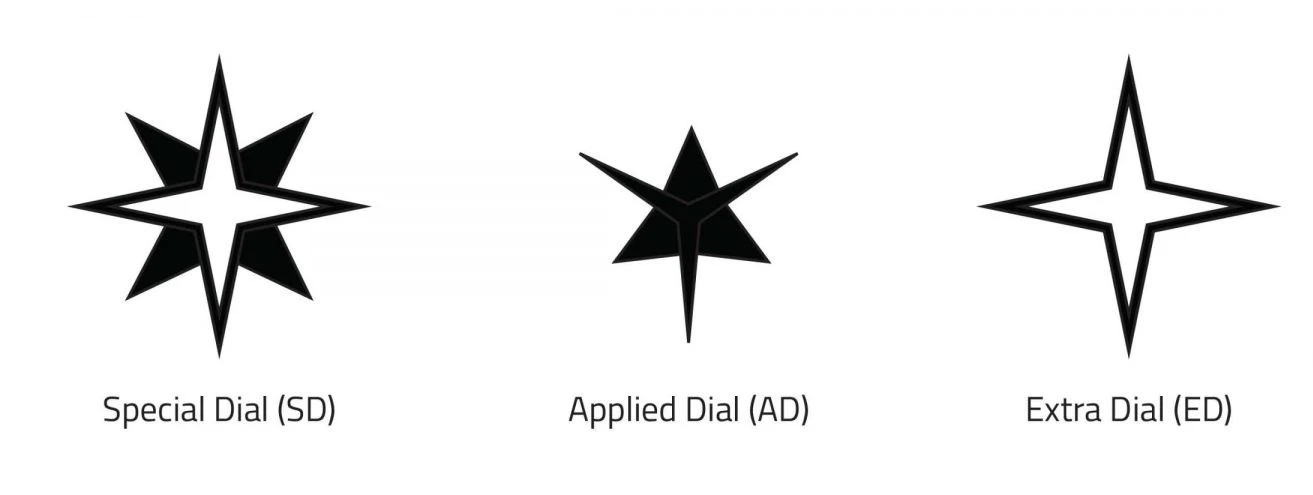
Understanding Seiko Dial Markings
AD (Applied Dial): Triangle superimposed with three lines — markers plated in gold or rhodium.
SD (Special Dial): Eight-pointed star pierced by a four-point hollow star — markers in solid yellow gold or solid white gold.
ED (Extra Dial): Four-point outlined star — a step above AD, denoting an upgraded dial finish.
Always search for the rarer SD models — their markers stay bright whereas AD markers sometimes corrode over time.