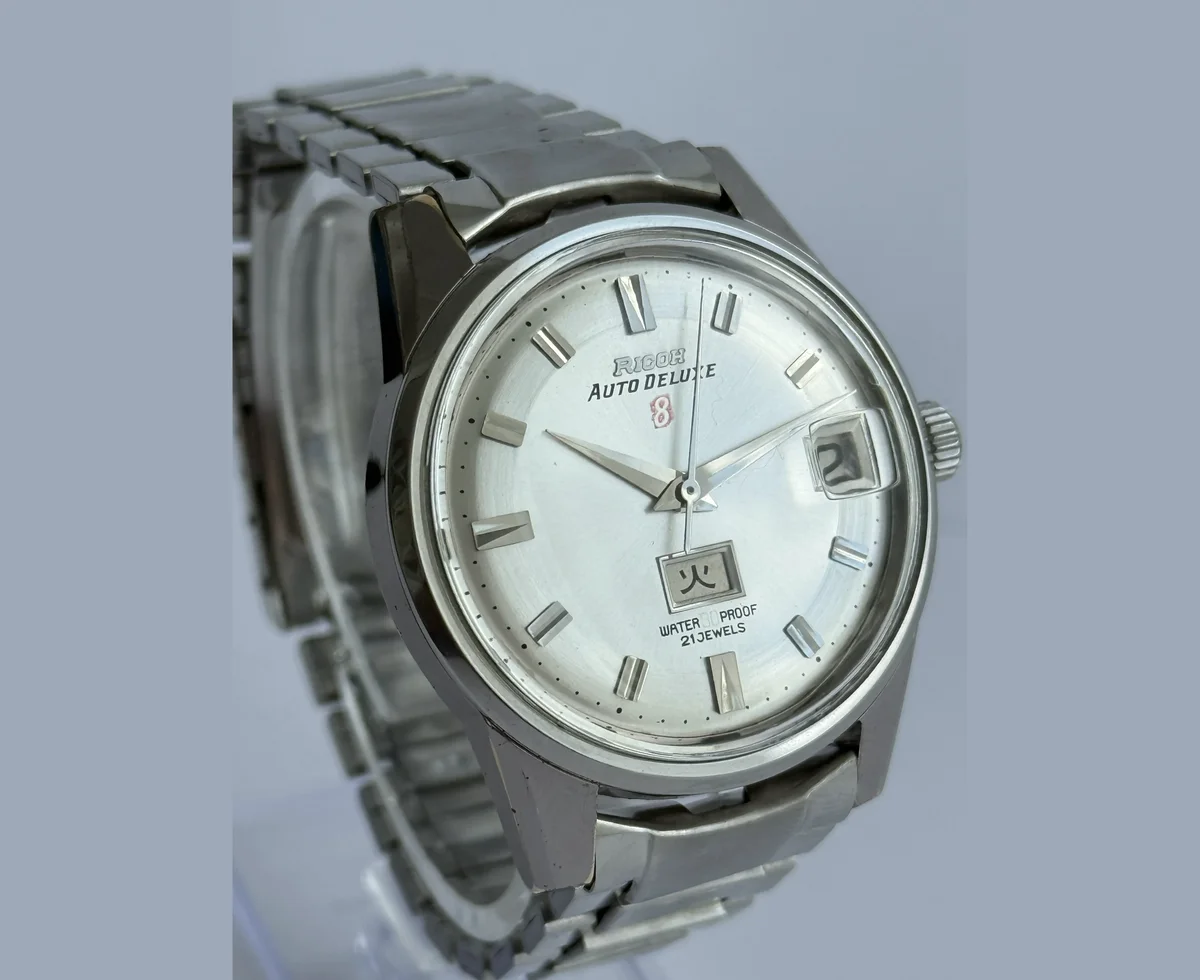
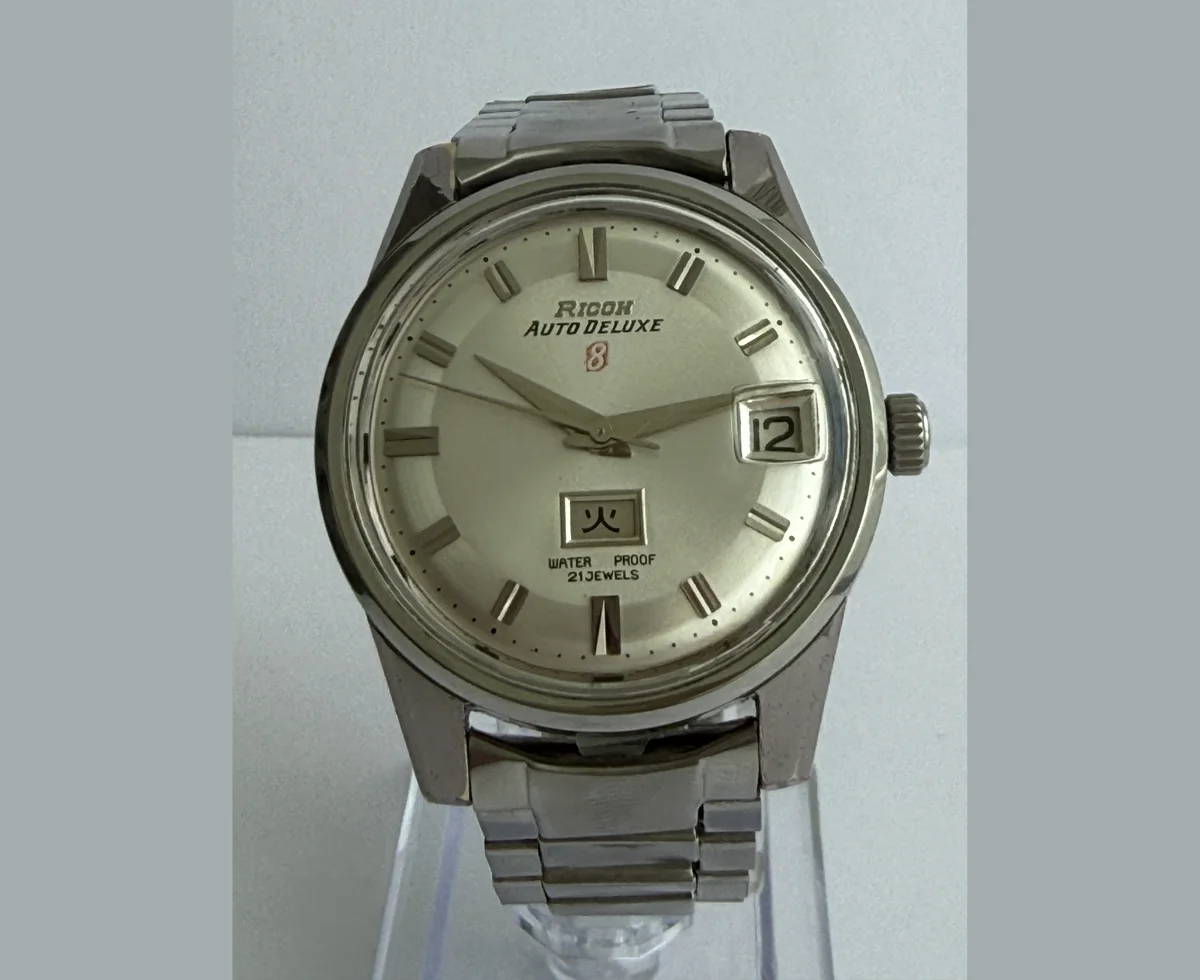
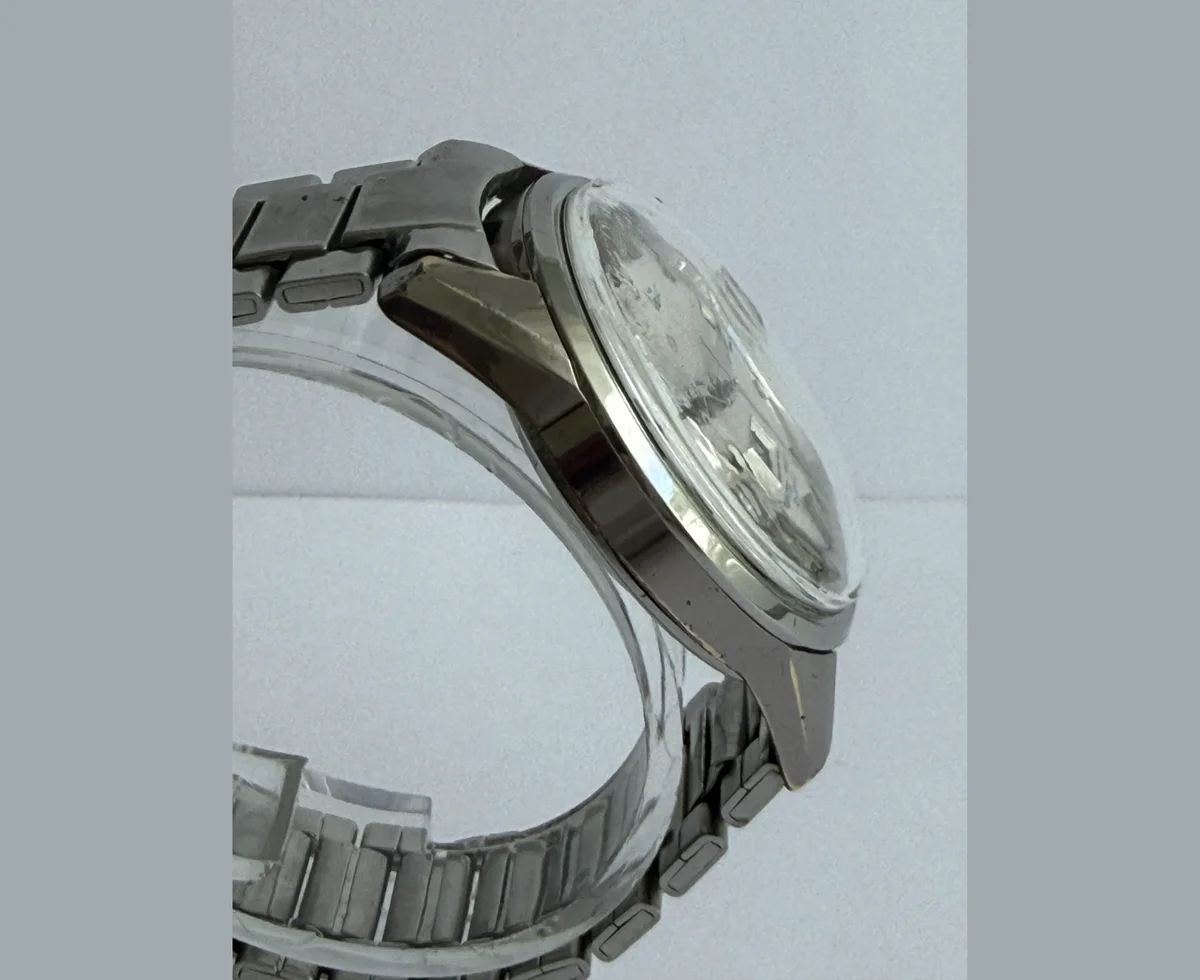
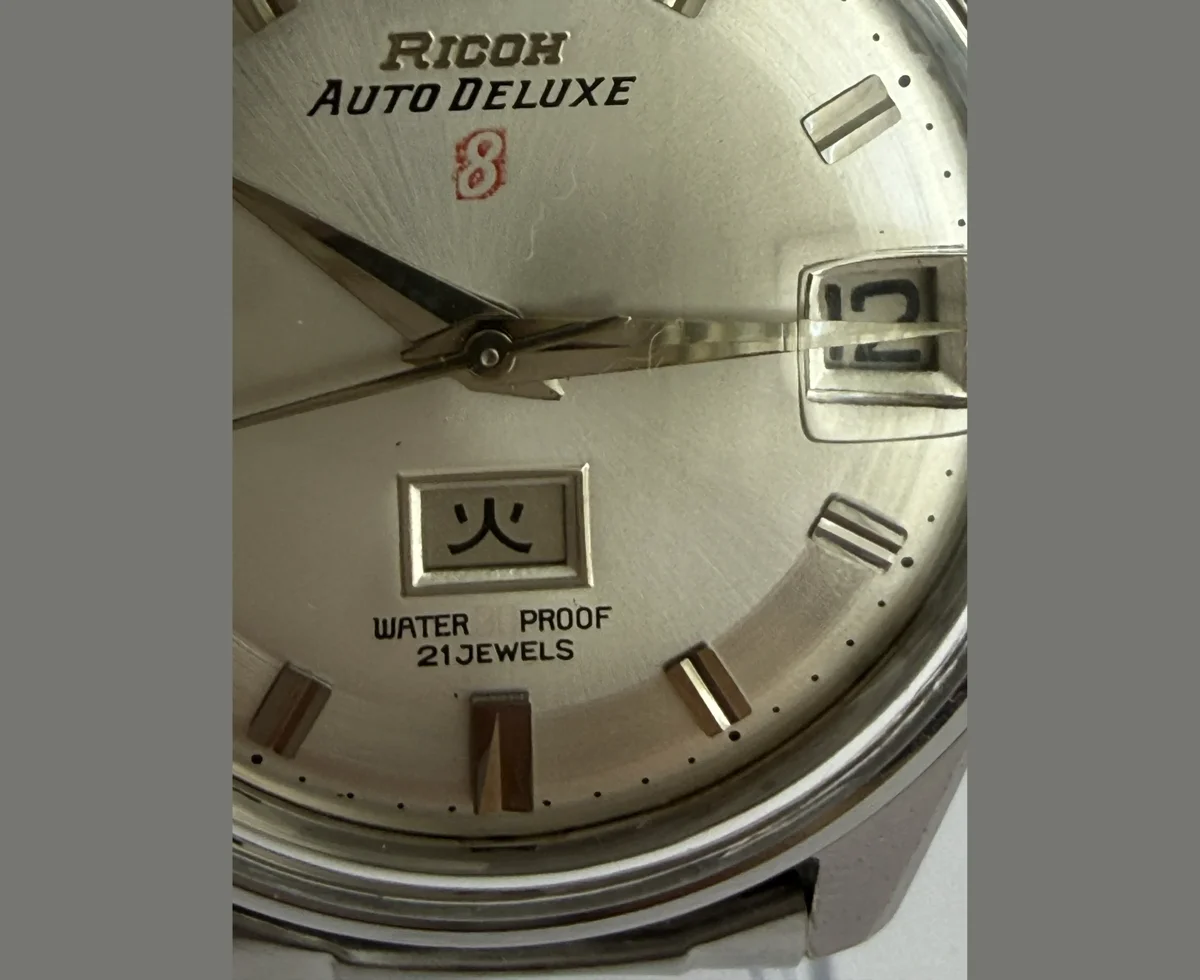
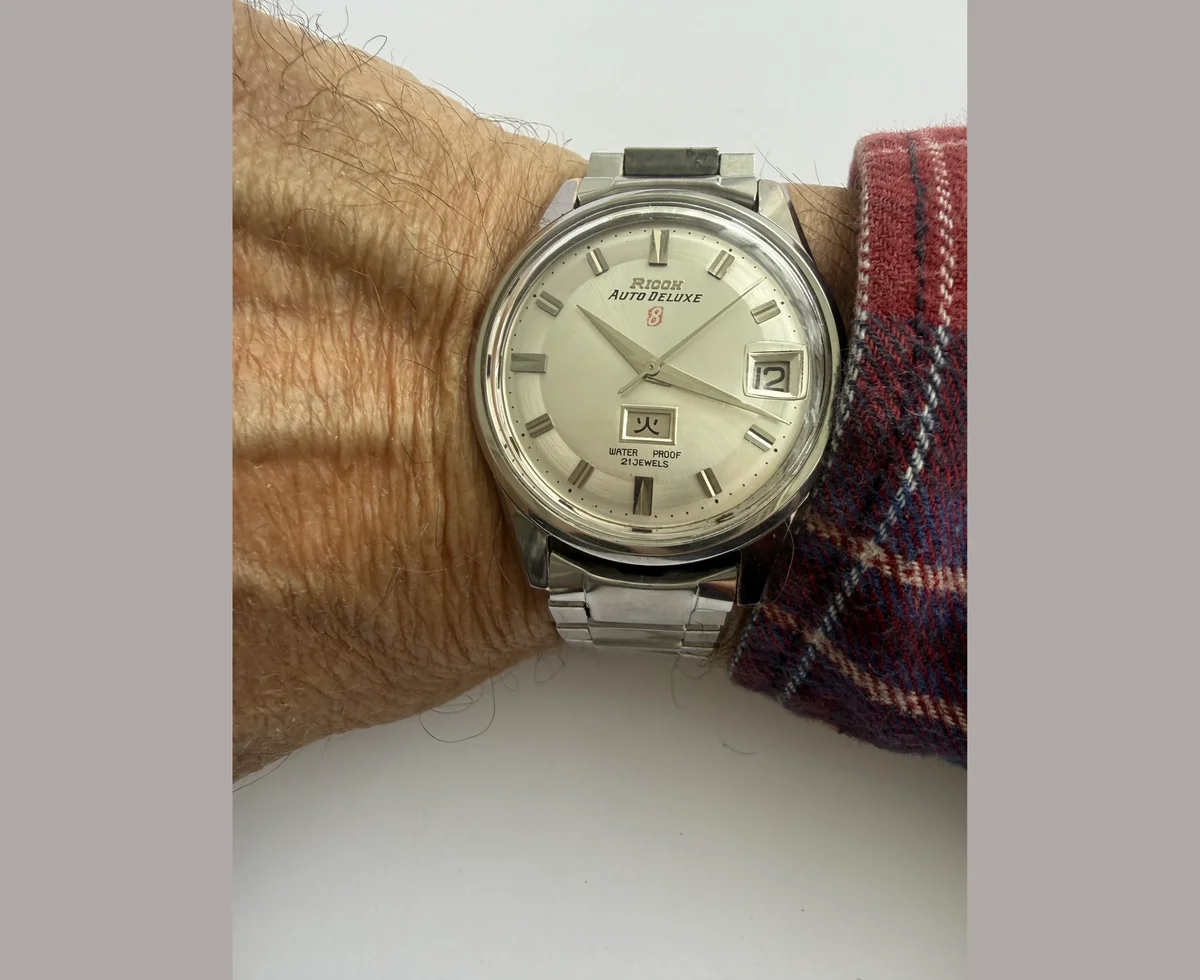
The "Deluxe 8" was released around early 1965 (Showa 40), at roughly the same time as the "Auto-Just," and was positioned as an entry-level model aimed at younger buyers. The market had shifted dramatically following the introduction of Seiko's "Sportsmatic 5" — younger consumers quickly came to expect day/date display and water resistance as standard, and competitors followed suit. Ricoh concluded that entering this segment was urgent, and it is believed the Deluxe 8 was launched as a redesigned version of the "Automat Deluxe." The "8" in the name derives from Ricoh's own internal designation for day-display models.
The mechanical configuration is essentially identical to the Automat Deluxe, with no notable differences. Shock protection is a mix of KIF-210·Trior and MonoRex across examples. The rotor form currently known is the oscillating-window type only. Quick date correction uses the hour-hand reciprocating method.
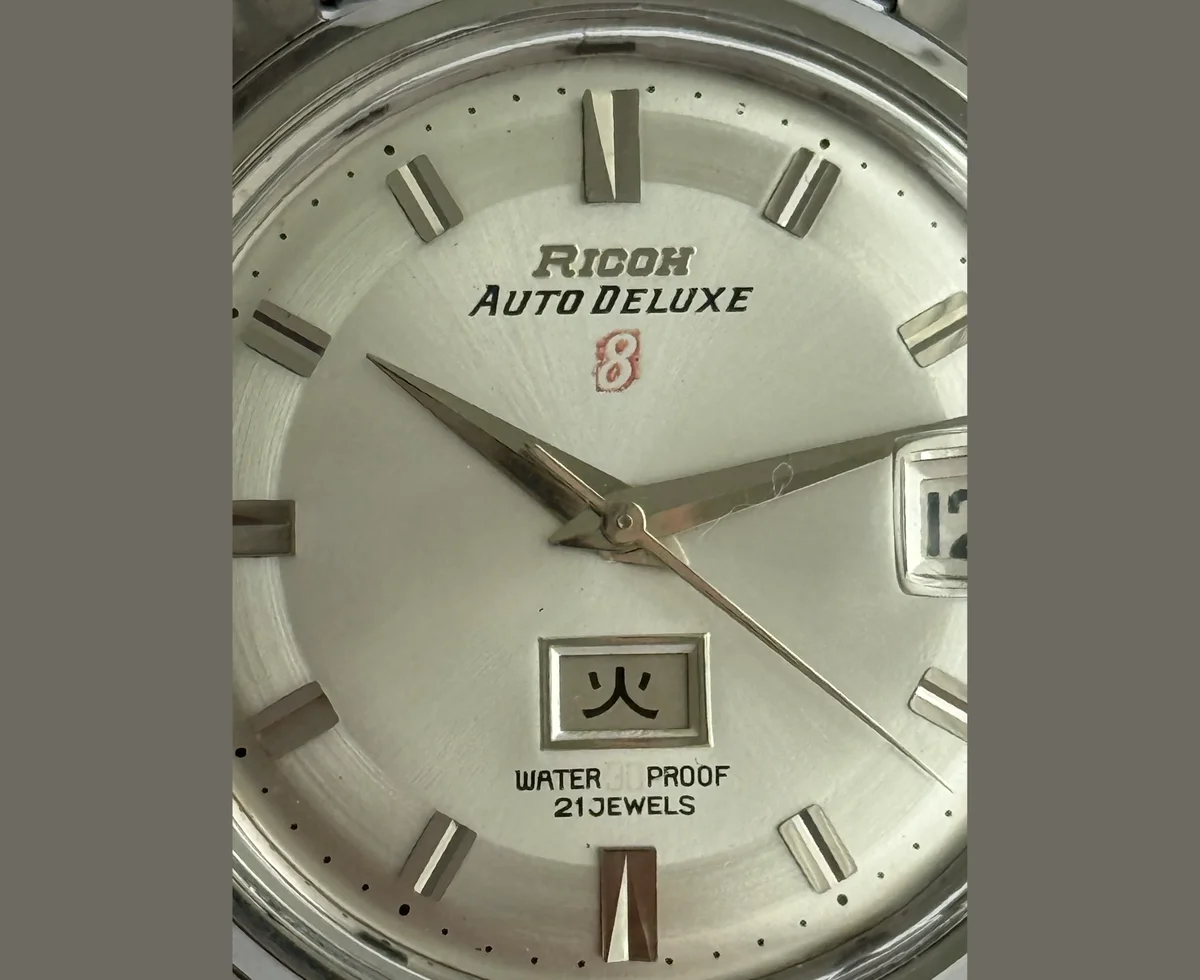
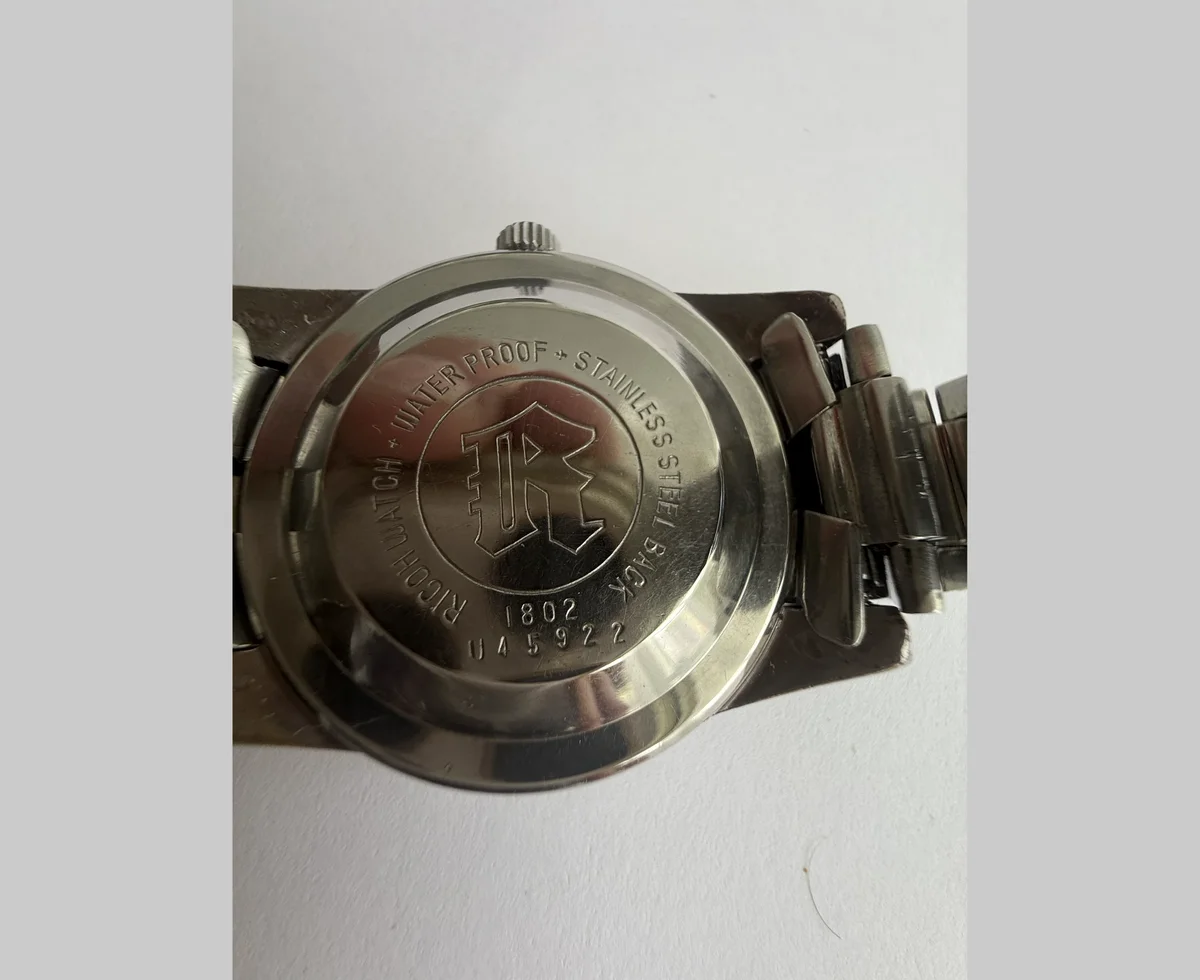
The defining dial feature is the "8" printed below the brand name at 12 o'clock — following the industry trend of using numbers to signal added functions on youth-oriented models (Seiko = 5, Citizen = 7, Ricoh = 8). The day/date display is a twin-window format across all known examples. Case diameter is approximately 37mm; facetted and shaped-case variants also appear. Case construction is press-fit waterproof — no non-waterproof variants are known. Finishing comes in GP (gold-plated) and SP (silver-plated); no stainless steel examples have been identified.
Release: Around early 1965 (Showa 40)
Caliber: 1218 (revised)
Shock protection: MonoRex / KIF-210·Trior
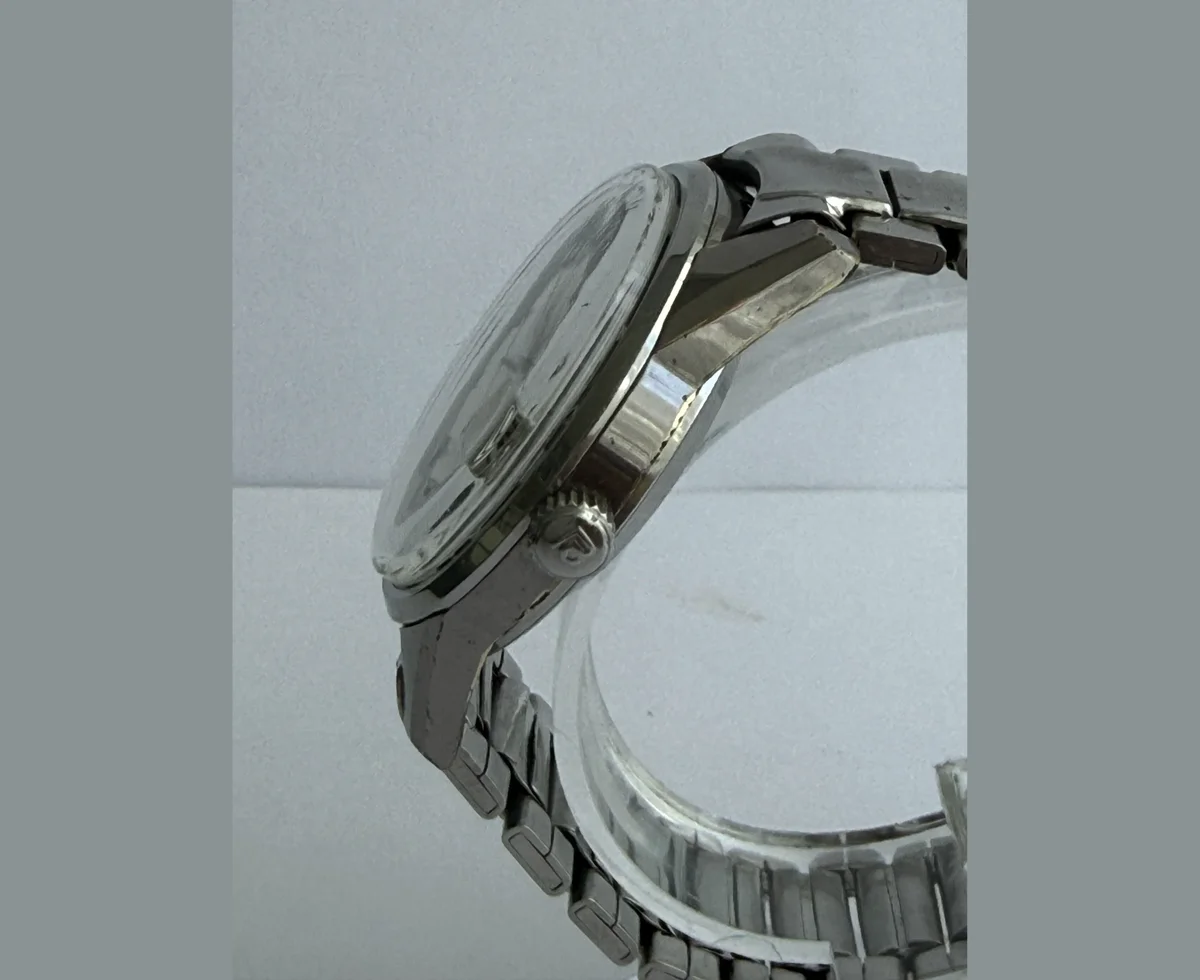
Case: ~37mm · GP or SP · Press-fit waterproof
Display: Twin-window day/date
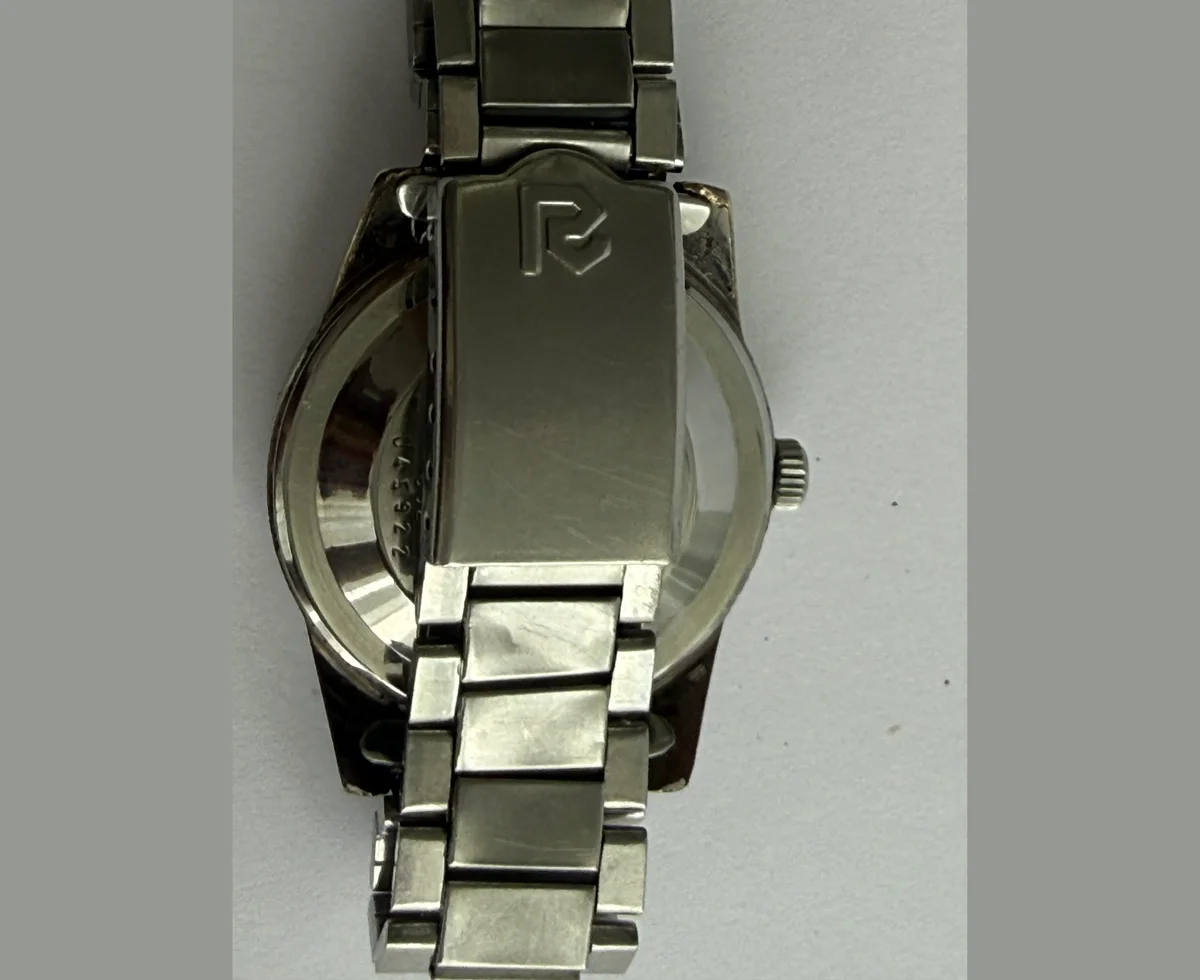
Retail price (Showa 39–41 / 1964–1966): GP ¥8,500 · SP ¥7,500 (with metal bracelet)